
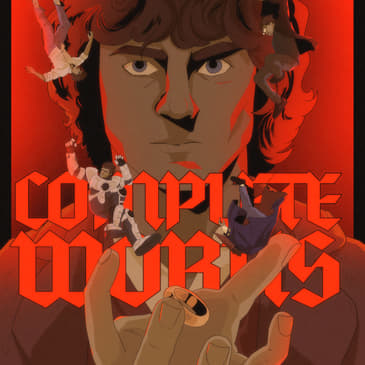


Director Barry Levinson directed some of the biggest films of the '80s, and he followed up his Oscar-winning hit RAIN MAN with a semi-autobiographical tale about an immigrant family assimilating into life in America. And since Elijah Wood is in it, it's time for Mike and Mike to talk about AVALON!
[00:00:00] Alright then, keep your secrets. Get that frog out of your pants. I'm the guy. The real guy. Where do all these movies come from anyway? Just fucking ding-a-ling. I will take the ring to Mordor. Though, I do not know the way.
[00:00:24] Hello and welcome to Episode 4 of The Complete Works Season 5. A deep dive into the career and films of actor Elijah Wood. My name is Mike Smith and joining me on this journey there and back again is my friend, co-host and fellow good son. Mike D'Acruccio. How you doing today Mike? I'm doing good. How are you? Good. How do you like that one? This is the fourth attempt at an Elijah Wood intro.
[00:00:52] I do like good son. Yeah? Okay, so far we've done Woodpecker. That was a hard pass. That's right out. Yeah, you're out of that one. Elijah Provida was the Episode 2 and then last week we said fellow carpenter. Yeah. Because we're working with wood and now I'm saying fellow good son. This one was my idea. The last three were all Kyle Cullen. Sort of music supervisor slash actual producer of the show. Yes. And good son is me. This was me throwing it out there.
[00:01:19] Of these four, what do you think we should continue going with? It's like I can't change it up every single time now. Unless that's the thing for this episode. The season is every time. I fear that we're setting that precedent. I'm panicking a little bit on that. You're freaking out. Yeah, I think I mean I like good son a lot. I do like Elijah Provida, but it is good son's the most normal, you know? That is true. Yes.
[00:01:44] So I do like that one. Okay, I think we'll maybe stick with good son for now. I mean, I think we have to use it when we do the good son when we get to that movie. That has to happen. If Kyle sends me any more ideas, I'll throw them in there. I'll keep switching it up. But I think for now I'm sticking with good son. Okay. Unless the listeners have already decided they want Woodpecker or something.
[00:02:08] Yeah, I mean, I guess I hadn't considered the options of like referencing the movies and it's always like, you know, go blue maniac, you know, yeah, psychopath. So I'm some pun on the name of the actor, but referencing the movie. That's a whole new world. That changes everything opens up a lot of doors for us. Exactly. All right. We're sticking with good son for now. We'll see how it goes from this point forward. But let's talk about Barry Levinson for a minute, Mike. You know what? I think we don't talk about Barry Levinson enough.
[00:02:36] We're always saying this. We don't talk about Barry Levinson enough. But Barry Levinson, very prominent filmmaker, especially in the 80s and 90s, got his start working as a writer on sketch comedy shows like the Carol Burnett show, the Tim Conway show, and then transitioned into film where he co-wrote a couple of Mel Brooks movies. Do you know which Mel Brooks movies that he worked on, Mike? Well, actually, I was just about to bring this up because I watched the Mel Brooks 99 year old man documentary. Oh, that's right. And I forget exactly the other one, which ones he writes on.
[00:03:05] I think High Anxiety is one of them. That is correct. High Anxiety is one. Because he tells a very funny story about, I didn't know this, Barry Levinson is the bellboy in High Anxiety that delivers the newspaper like the scene in Psycho, because he keeps asking him, give me a newspaper, son. And he's like, here's your paper. And he's stabbing him in the shower with the newspaper. Okay. And so they tell that story and how they came up with that idea and all that stuff. And I was watching it. I had no idea. I've watched that movie my whole life.
[00:03:34] High Anxiety is the one for me, for Mel Brooks. We watched it. That's big in the Decretio household. And just the whole time, I had no idea that was legendary indie drama filmmaker Barry Levinson. Yeah. I had no idea either. That's great. Yes. He co-wrote High Anxiety and obviously appeared in it. He also co-wrote Silent Movie around that same time too. Yes. And also worked as an uncredited writer on Tootsie in 1982.
[00:03:56] But in 82, he made his directorial debut as well with the semi-autobiographical Diner about a group of friends in 1959 Baltimore. I've seen Diner. It's very good. And this led him to becoming one of the most successful directors of the 80s with hits that included The Natural, Good Morning Vietnam and Rain Man, which won Best Picture at the Oscars and was the highest grossing film of 1988. The biggest movie of the year was Rain Man. What a time to be alive.
[00:04:25] Outgrossing movies like Who Framed Roger Rabbit, Coming to America, Big, Die Hard came out in 1988. Rain Man was the highest grossing film of that year. That's insane. That's wild. A small scale drama about two brothers, Tom Cruise and Dustin Hoffman, just fully powered by those movie star performances and critical acclaim going into the Oscars. Yeah. No, just a crazy huge success that Rain Man was. All from being the bellboy in high anxiety.
[00:05:23] That's right. The saga of a Polish Jewish family that explores their assimilation into American life and the changing cultural values in each generation. And since Elijah Wood is in it, we've got to talk about Avalon. I came to America in 1914. And then I came to Baltimore. It was the most beautiful place you've ever seen in your life. Oh, Sam, how many times do we have to hear this story?
[00:05:53] The children know the story. I'm telling them about when I came to America. Yeah, we know about it. We all heard it before. They shared a dream called America in a place called Avalon. All right. So Elijah Wood actually plays a pretty major role in Avalon. I wasn't expecting that, Mike. Yeah, yeah. Especially the last couple we've been talking about.
[00:06:22] You know, he's just a young kid. He's very young. And then the movie starts and we'll get into it, I know. But it's like, oh, here's a whole family of children. Oh, that one's Elijah Wood. And I was like, oh, this is going to be the, like, he's in these 10 minutes and that's it. And then, no, he's not. He's in the whole movie. And I was sort of, I think when I was reading the description of the movie, I was expecting a, like, kind of time-spanning saga. So I was, even if we were following that kid, I was expecting to follow an older version of that kid later on in the movie. Right.
[00:06:51] Or, like, several different older iterations of them. But, no, we're with Elijah Wood for, like, 95% of the movie's runtime. It does jump ahead at the end and there's another actor playing that character. Yes, yes. But you have Elijah Wood. He plays a major role. He is Michael K. Towards the end of the movie, an older version of that character appears, played by Tom Wood. I think no relation to Elijah Wood. But his name is Tom Wood. Although he actually, he does look a lot like him. He does. Good casting. He was also one of the U.S. Marshals in The Fugitive.
[00:07:21] Really? As well as the movie U.S. Marshals. They brought him back for the sequel. I gotta rewatch The Fugitive in U.S. Marshals. Yeah, absolutely. I mean, I'm always saying this. That's something that we... We don't talk about Barry Levinson enough. And I gotta rewatch Fugitive in U.S. Marshals. Exactly. Maybe I only said I gotta rewatch The Fugitive. I've actually never seen U.S. Marshals. I've heard it bad. Whoa, going on the list. Is it going on the list? Are you a U.S. Marshals fan, Mike?
[00:07:48] I will remain blissfully unconfirmed that I remember really liking U.S. Marshals, and I'm afraid to ever rewatch it and find out that it's bad. I've always been very curious to watch it, just because, yeah, Tommy Lee Jones back in the role. Like, all the Marshals are basically back, right? Like, Joey Pants is back in U.S. Marshals and all that. I think it's everybody, yeah. Yeah, so it's just, it's how do you do The Fugitive without Harrison Ford? And is it Wesley Snipes who's the one on the run in U.S. Marshals? Or is it Jamie Foxx? It's Wesley Snipes. It's Wesley Snipes, yeah. Okay, cool. Put it on the list.
[00:08:17] I would like to give it a shot. So Michael's father, Jules Kay, is played by Aidan Quinn, who in more recent years was in the cast of Elementary on CBS. This role was actually originally going to be played by Dustin Hoffman, but he had to drop out, scheduling conflicts, which makes sense. Again, follow up to Rain Man. And then his mother, Ann Kay, is played by Elizabeth Perkins, who was a love interest in Big that same year, or the same year as Rain Man, anyway, and who was also on Weeds many years later.
[00:08:42] His grandfather, Sam Krasinski, is played by Armin Mueller-Stahl, who was nominated for an Oscar for the movie Shine. His grandmother, Ava Krasinski, is played by Joan Plowright, who was Mrs. Wilson in the Dennis the Menace movie in 1993. Incredible. Gabriel Krasinski is played by Lou Jacoby from The Diary of Anne Frank. Izzy Kirk, Elijah's uncle, is played by Kevin Pollack from Casino, The Usual Suspects, The Marvelous Mrs. Maisel. As soon as he showed up, I was like, that guy. I don't remember.
[00:09:09] I know he's very much one of those guys who's like, I don't know where I know that guy from, but I know I know him from a million things. He's in everything, yeah. Exactly. His wife, Dottie Kirk, is played by Eve Gordon, who was Felicity's mom on Felicity. And Herb Levinson, Barry Levinson's uncle, plays Rabbi Krauss. And he's in a lot of Barry Levinson movies. And also many other Barry Levinson actual family members appear in the movie during Grandma's funeral, which is largely based on their own grandma's funeral.
[00:09:37] There's a story where he's directing one of his cousins like how to act during the scene. And they're like, we did this already, Barry. We know what we're doing. We know what we're doing. That's incredible. The movie was written and directed by Barry Levinson two years after Rain Man and one year before his next film, Bugsy, with Warren Beatty and Annette Bening, which ended up being another big Oscar player with 10 nominations. So, yeah, big movie in 1991.
[00:10:02] Avalon, coming after another big Oscar player with Rain Man, did not get as much love from the Academy, but it still did get four nominations. Wow. So, for a movie that, you know, I feel like when we looked at this and, you know, I know the big Barry Levinson films, you know, I know Good Morning Vietnam and Rain Man and all that stuff. Avalon is one that I had never heard of. Like, I was not familiar with this movie at all. Okay. But it was. Were you familiar with this movie at all, Mike?
[00:10:27] Sort of only in passing because screen drafts, they do five film franchises on their Patreon. Did they do the Baltimore films? No, they specifically did Barry's Baltimore and it was his five Baltimore movies. So, I remember them talking about it and I tried to go, it's not on the wiki because it's like a Patreon episode, so they don't have it like on the public wiki or whatever. Gotcha. And I didn't want to re-listen to the whole episode to see what they, how they talked about, you know, where it ranks.
[00:10:54] But so, like, I had heard of it, but only kind of in that regard. Like, Diner is the one that I, like, knew of. I've never seen Diner, but, like, I knew about it from those movies, the, like, Baltimore movies. Right. Um, that's my Avalon prelude. Cool. Yeah, I had no context for it, but it did get four Oscar nominations, Best Original Screenplay, Best Cinematography, Best Costume Design, and Best Original Score. It was nominated for all those. Didn't win any of them, but it got in.
[00:11:17] Levinson's most recent film actually just came out last year, 2025's The Alto Knights, which is a crime movie with Robert De Niro in a dual role. He plays two mob bosses in Alto Knights, and that's a movie that doesn't exist. I never heard of it. So, yeah, it's a weird career because Barry Levinson, again, one of the biggest filmmakers of the 80s and 90s, like, obviously made Rain Man and so many other big movies. And then in once you get to the 2000s, 2010s, there's a lot of stuff that kind of fades into obscurity.
[00:11:44] I remember in 2012 he made The Bay, the found footage horror movie. What? Yes, and I remember, like, that coming out and me seeing it and kind of liking it and thinking it was cool. I was like, Barry Levinson made this? This is weird. Weird. So it has definitely gone down some weird avenues, but most recently did The Alto Knights. He also executive produced Dope Sick, the Hulu miniseries a couple years back. And we have actually covered one other Barry Levinson film on this podcast in the past, Mike. Oh, boy.
[00:12:15] Is it a Goldblum? It is a Goldblum. So you got that. Everyone in this movie, I was like, that could be Jeff Goldblum. That could be Jeff Goldblum. Like every guy. Yes. He would have been great in this, actually. Yes. Fuck. What movie was a Barry Levinson movie? I'm really curious to see if you're going to get this. Can I get an era? For some reason, I want to say The Mountain, but I don't think that's right. It's not The Mountain. You can get an era. It's the mid-2000s. Oh, boy. Oh, boy. The trickiest era of all.
[00:12:44] The trickiest era. When was the mix-up, the switch-up, the switch? What was that? The switch? It was not the switch. I'm not going to get there. Man of the Year from 2006. Man of the Year. Which Jeff Goldblum is like a man in the shadows orchestrating Robin Williams' presidency or whatever it is. Yes, yes. That movie's not that good. But this movie opened in limited release on October 5th, 1990. Opening to number one was an action movie. Mike, do you want to take a guess?
[00:13:13] An action movie with a pretty big action star of the time. What JCVD movie would have come out? It's not JCVD, but you're close to the kind of actor it is. I'm on the right track with that? Yeah, absolutely. Oh, man. I don't know. I can't think of anything. It's an actor that many say has gone off the deep end in the last few years. It's a Steven Seagal movie. Oh. When did Under Siege come out? Is that then? It's not Under Siege. March for Death is the movie. Yeah. Got it.
[00:13:43] I didn't expect you to get that. That would have been crazy. That would have been wild if you pinpointed that exactly. Yeah. No. Steven Seagal in March for Death opens number one this weekend. Opening to number two was a re-release of a Disney movie. Any guess? It was a... There's so many. It's a re-release for its 50th anniversary. Oh, boy. I don't know when any of those actually... The big Snow White, Cinderella, when those movies actually came out. Right. But it's like that era, I assume.
[00:14:13] That era of Disney. Yeah, absolutely. Sleeping Beauty? I have no idea. No, it's Fantasia. It was re-released for its 50th anniversary in 1990. So that was opening to number two that weekend, which I haven't seen in a very long time. I should watch that again. I feel like it's great. Yeah, especially... Fantasia probably rocks. Fantasia probably rocks, especially with the added context I provided, I guess, months ago now,
[00:14:37] due to podcast time travel, that Millicent Patrick, the woman who designed the Gill Man from Creature from the Black Lagoon, partially animated the Chernabog sequence in Fantasia. Oh, right. Yes, of course. And Chernabog, who we all remember from Kingdom Hearts, is one of the last boss battles of the first Kingdom Hearts game. That's the third thing we're not talking about enough. I'm always saying... I'm always saying this.
[00:15:06] You know, my reaction to... The news broke today that Disney was pulling out of its $1 billion investment with Sora, the AI thing, and that whole thing has gotten bust. And my reaction to it was like they realized they were spending $1 billion with the wrong Sora. They were supposed to... They're going to put all that money into Kingdom Hearts 4, and they got confused. You know? That was the issue.
[00:15:28] I did see a lot of posts that were like, you know, text bubbles for Sora. Like the character. In any case, Fantasia opened at number two that weekend. The rest of the top 10... Oh, yeah. That's right. The rest of the top 10 consisted of Pacific Heights, Ghost, Goodfellas, Postcards from the Edge, Flatliners, Narrow Margin, Desperate Hours, and Funny About Love. I'm so glad Yandabong got in there.
[00:15:56] Oh, I guess he didn't direct Flatliners. He shot Flatliners, yes. As immortalized by Bill Hader in Popstar. Yes. Yes, Yandabong shot Flatliners. Joel Schumacher directed that movie, I believe. That's right. The letterboxd plot synopsis for Avalon reads, A Polish-Jewish family comes to the U.S. at the beginning of the 20th century. There, the family and their children try to make themselves a better future in the so-called promised land.
[00:16:22] So, Mike D, going into Avalon, it sounds like you had a little bit of context for what this movie was all about. You are an avid Screen Drafts listener, as has come up on this podcast many, many times. I am about four years behind on Screen Drafts, but I am catching up. You're making progress. I'm getting progress. Yeah, but still, I am listening to the podcast. You have heard of Avalon. This was a movie that I feel like I had never heard of, and I've heard of, you know, there's big films in the Barry Levinson filmography that are big pillars of, like, that culture of that time.
[00:16:52] Avalon, I don't feel like is one of them, you know, in terms of just, like, staying power and popularity and things like that. Yeah. But what were you expecting from this film, and what did you get from Avalon? What did you think of this movie? Yeah, it's actually funny. I think maybe Barry Levinson, sort of like what you were talking about, like, has kind of, you know, maybe faded from popularity, cultural impact. Like, I know the name Barry Levinson, but I don't think I knew he made Good Morning Vietnam or, like, any of the movies that you did, The Rain Man. Like, I don't think I knew that those were his movies.
[00:17:22] So, like, the five movies I know for sure are Barry Levinson movies are those five Baltimore. Are the Baltimore movies? Yeah. Which is very funny. So, I was like, oh, yeah, I have a lot of Barry Levinson. Yeah, of course. Yeah, of course. Naturally. Naturally. Yeah, but, like, I've never heard anything else about it. But so, going into it, it's, you know, I saw that it was this kind of, like, generational spanning, you know, family drama kind of thing. And it starts, and it's really, you know, like, impressionistic, sort of.
[00:17:51] That opening shots of him walking down the boardwalk with the American, it's the 4th of July. He's telling the voiceover narration that he arrived and came to America on the 4th of July in 1914 and all this stuff. And I was like, oh, this is kind of, like, what you would feel like coming to, like, the sort of the end of blowout also. Where it's, like, the 4th of July celebration. Yeah. The beginning of this movie is kind of filled with hope and, like, optimism. Yeah, yeah. And the end of blowout is very much not.
[00:18:21] It's the two sides of America, basically. That's true. That's a good point. What you might think, what you first feel when you get to America and then what America's actually like. Once you spend a little time here, like, God, I hate this place. God, this is bad. So, there's that. And then he kind of, I was, like, really charmed. Like, once it cuts to, like, the present day and it's the grandpa telling the kids the story of when he came to America at Thanksgiving dinner. And they're all, like, we've heard this story before, but we must tell the story.
[00:18:49] I mean, I'm sure most families have that. You know, that story where whatever it is, where it's, like, every holiday we all, everyone tells the same story. We all laugh at the exact same parts. It's still funny every time. You know, that kind of thing. So, I was, like, really just charmed with that part and taken in. And I think maybe the knock against this movie for me that keeps it from being, like, an all-timer is it's two hours. And that's just really long. You know? I mean. I mean, for most of it. Yeah.
[00:19:17] I did eventually, like, okay. We get it. Things are hard. Everyone's mad. Like, we can, I don't know. We can just speed this up a little bit. But basically, it's really, like, a 20-minute section or whatever in the back half where I was kind of, like, all right. I'm getting it. And I think that's just my, like, you know, 2026 fried attention span brain. I can't do it anymore. And then it kind of pulls me back in. Well, you know, basically once the warehouse fire and all that stuff. And I was like, oh, shit. I'm back in there.
[00:19:47] I think I, like, literally gasped when the, it's the moms are at the pool on the 4th of July. And she's like, oh, I just talked to Izzy on the phone. And the kids are playing in the basement with the model planes. And I was like, oh, no. Yeah, exactly. Yeah. It's like, oh, shit. Like, sit forward in my chair. So, but overall, yeah. I mean, really like this movie. It's great. The performances are great. You can feel the, like I said, the, like, every family has some version of this kind of thing. Yeah.
[00:20:13] I guess if you have immigrants in your family a couple generations, one or two generations back, you know, my grandparents were immigrants. So, we've all got these stories. The same thing. And I was in. I was in mostly. It's just a little too long for my brain in 2026, basically. Which I guess isn't the movie's fault. But that's where we are. Yeah. No, I do agree with you that, like, yeah, the movie is about two hours. And it's not that I think it's too long. It's just that, I don't know. Yeah. It loses a little bit of something in the back half. But otherwise, I think it's a very, very charming movie.
[00:20:41] I think it does resonate, especially if you have a large immigrant family. Similarly, like, you know, my grandparents were Irish immigrants. They came probably around the same time that this movie takes place. Right. I say probably. No, it was around the same time. Yeah. It was around then. And yeah, no, it's just it's one of those things that, like, the movie really does a good job of depicting kind of the slice of life of this family. You get it. Like, even though there's a lot of characters to keep track of, I felt like I got a good sense of all of them, which I think is a good accomplishment.
[00:21:11] Like, I feel like when the movie first starts, I was kind of like, there's a lot of people here. And there's not, like, a lot of big names in the cast. It's mostly character actors. So it was like, it's going to be a little tough to keep track of all this. But by the like by the halfway point, like I was pretty invested in the grandfather and Elijah Wood and his parents and his uncles and Kevin Pollack and everybody. Everybody had kind of had their own distinct personality. And I think the movie uses those characters to play off each other really, really well. Yeah. So, yeah, all of that's really good.
[00:21:38] I think the depiction of the family as kind of this tight knit unit is really effective. And I really like the way that it sort of depicts the fact that, like, you know, these are immigrants coming into America who want to retain their culture while at the same time assimilate into American life. And the movie does a pretty good job of depicting how, like, assimilating into American life kind of slowly over the years hurts the family in some ways where, like, the family starts to grow apart in some ways. Yes.
[00:22:06] You know, over the years where like when the movie first starts, everybody is living in one house, you know, and everybody's together all the time. They're all living in one house and it's like 15 people in one house. And then eventually, like Elijah Wood's parents, like, move out to the suburbs and the grandparents, like, end up moving in with them and all that kind of stuff. But like suddenly there's like a disconnect where, like, everybody's not connected all the time anymore. Yeah.
[00:22:29] And then there's like the invention of television and that starts to like, you know, turn dinner time into being like, OK, now we're watching TV kind of time, you know, and just these kind of like gradual things that come up as a result of American life and like kind of just adjusting to what that life is. You know, it's one of those things like it's not necessarily negative one way or the other, but it does like impact how the family dynamic is. As time goes on, you can see it like affecting the older people in the family who remember what it was like in the earlier days.
[00:22:58] Yeah. Yeah. And I think it's also really interesting how much of this movie specifically takes place on the Fourth of July and Thanksgiving and multiple like, you know, the two most American of the holidays. Right. So I think that's really interesting. And yeah, the way that how many times the Thanksgiving dinner scene is like, I never understood this holiday. What is this? Like, what are we giving thanks for? Like, you know, it's just like, but we're American now and this is what we do in America. Right. Yeah. So I think that's really interesting.
[00:23:23] And like you said, the way that adherence to tradition drives a wedge or going against tradition by not waiting to cut the turkey, like it drives a wedge between the family, the brothers. I think that's fascinating. And yeah, I think I think it's interesting to chart that. And then the way the older generation tries to keep up as best they can, like the Elijah Wood getting in trouble at school for not the difference between Ken and May. Yeah. And then like the grandfather being like, what do you mean? Like, what do you mean? Like to the principal.
[00:23:53] You're right. The grandfather doesn't understand the difference either. So it's like, why is he in trouble? I don't understand. He has to go to the bathroom. Exactly. Yeah. And also the grandfather's in the right. Why was he in trouble? Man, that was my least favorite thing that would happen in school. Yeah. I mean, you went to a Catholic school, so you might have more strict. It's more polite or correct to ask, may I go to the bathroom than can I? Because yes, you have the ability to, but no, you're not allowed. Right. It's like, shut up. And if you said it wrong, would they refuse to let you go to the bathroom?
[00:24:23] I mean, I don't know if, yeah, probably. I don't really remember. It was one of those, like, you would just sigh and then ask it correctly. Yeah. You know, nobody would do, which is, you know, it's like Elijah Wood's character, like is definitely doing that on purpose to get out of class at a certain point. And it's so funny when he does, like when that happens and he asks, can I go to the bathroom? And she's like, you can, like you can, but you may not or whatever. And he like turns to the other kids, like, oh, she's going to make an example out of me. Yeah. Yeah.
[00:24:51] And the other guy's like, I have to go, but I'm afraid to ask. Very good. Yes. So all that, all that stuff is very good. Yeah. No, I really enjoyed this movie. I think it's just shy of being great necessarily, but I think there's a lot of really good stuff here. Enough for me to declare it like not quite an underseen masterpiece, but like, you know, an underseen like worth checking out. Now, this is this is good stuff. Yeah. I don't really know why we haven't ever heard of this before. You know, it's one of those kind of movies.
[00:25:18] Why wasn't this on TNT every day or something like that? Like, come on. Yeah, absolutely. But Elijah Wood is in this movie again, playing a pretty major role, which, you know, our first two films, he's only in like one scene. Last week, we talked about Child in the Night, which he's a major role in, but that's a TV movie. This is kind of his first, like, you know, theatrically released feature film, like kind of starring role. So what did you think of Elijah Wood in Avalon? I think he's pretty great.
[00:25:45] I think it seems pretty obvious that Levinson at least has a talent for directing children because half of the cast of this movie is children. So I think he does a really good job of getting a like pretty normal, like believable child performance. Like, you know, he doesn't it's not like the like really capricious, like child who's who's actually like he's basically a little adult. Like, no, he's a kid who doesn't know what's going on. A lot of times he's always asking his parents for help and his grandparents. And yeah, it's really effective. I don't know. He's really good.
[00:26:14] He's got those big blue eyes that just look so sad all the time, you know, especially when his dad gets stabbed. That was that's crazy. That was my how does this fit into the Elijah Wood roles we've seen so far? This is the second time in a row, the second movie in a row in which Elijah Wood has to watch his father be brutally attacked. Yeah. I mean, third, I guess, if you count Richard Beard beating up. Yeah. Third movie in which he yeah, that was his mother in that movie. But yeah, watching his parent get brutally attacked. Yeah.
[00:26:43] This is a recurring theme in the early Elijah Wood films. Crazy. Crazy. Very dark. He's in dark movies. Yes. But yeah, I think he's great. And like I said, it was like kind of a relief because there's that big it's Thanksgiving. So it's the grandpa telling the story of when how he got here to all the kids. And I was like, oh, yeah, there's the like there he is. This is the scene that he's going to be in for this movie. And then it's like, oh, no, he's like basically the main guy, the main character.
[00:27:09] I guess they know that the Levinson insert, it seems it's good. It was exciting. It's like exciting. They're like, oh, here we go. It's like a real real movie, a real role. He's doing it. Yeah, absolutely. No, I think he is. He's really terrific in this movie. And, you know, so this movie came out limited release. I think it opened like six theaters. And then suddenly, like the next week, it opened super wide. And I think, according to Barry Levinson, he didn't like that release strategy. The movie like severely underperformed at the box office, didn't do super well.
[00:27:37] And he blames the studio for like they should have like been rolled out better. Like I should have like kind of built, spent some time to build word of mouth before you released it all wide, kind of like dumped it into theaters or whatever. Uh, and so, yeah, the movie like didn't perform that well. Uh, what an embarrassment of riches that the movie was in too many theaters. I mean, I think he's probably correct, but like, wow, how far we've come. Yes, absolutely. Uh, but yeah, no. So it was a weird kind of situation where like Elijah Wood, major role, major filmmaker,
[00:28:06] uh, you know, obviously at this point, uh, and just a movie that didn't do well. People didn't really see it's, it's a weird thing where like we talk about Elijah Wood as a child actor, but we can't point to like that many, like big Elijah Wood child actor movies in a weird way. Right. Interesting. Yeah. And he's in movies throughout the nineties. He's in the good son. He's in flipper, you know, movies that were like relatively big or like got had big marketing
[00:28:36] pushes. Like he's in stuff obviously. Uh, but he doesn't have like, he doesn't have his home alone. He doesn't have his Matilda, you know, he doesn't have those kind of child actor movies. Uh, and so, you know, I think that sort of works to his benefit, especially in Lord of the Rings. I think if he had a home alone, he wouldn't be in Lord of the Rings. You know, uh, I think he's in a weird way, like a child character actor who is like kind of maneuvering through the system and doing all kinds of different roles and often taking
[00:29:05] on like darker material than I think other child actors do. Uh, and I think Avalon, uh, showcases that really well. I'm just picturing like Elijah Wood and, uh, like M. Emmett Walsh, like the two ends of the spectrum is the M. Emmett Walsh of kids, you know? That's funny. Um, but no, I think you're probably right. That is interesting. I was kind of thinking that like having not had the context of, you know, that this movie didn't do super well. I was like, well, this is probably like the Elijah Wood movie.
[00:29:34] Like this is like that gets him the springboard into like more stuff. Yeah, I guess you're probably right. I guess just sort of trying to think back through my mind of what, what he's in sort of like pre-faculty, which I guess, I mean, I don't, I think that probably wasn't even, was that even his hit? I don't really know. That was a little. Faculty, I think did fairly well at the time. It's like a cult movie now. Yes. Uh, and that's kind of at the time where like he's starting to transition out of kid roles and kind of maneuver into like, he does like the ice storm and he does, uh, that might be around the same time. The wood. Yeah. Yeah. Like the, like those, those two are like 97 and 98.
[00:30:04] Uh, so he's like at least a teenager by the time those come out. Right. Right. Uh, you know, I'm thinking of like under 10 years old, what are they doing? What are they doing? Yeah. That thing. Uh, and yeah, no, I, I think, I think people probably saw like people within the industry probably saw this and probably saw Elijah Wood as a result and like realized he was a good actor and started to cast him in more things. Cause he's in, you know, he's pretty much the star, like the star or like the third build or whatever in like every movie going forward. It's funny how like, you know, we talk about like Jeff Goldblum or something in season two
[00:30:33] and like there's 10 movies in a row where he pops up for one line. If he even has a line, you know, he's thug number two or whatever. Yeah, exactly. And that's the case for most actors. Uh, you know, that's, that's how it usually works. Uh, and somehow we've mostly avoided that in our, in our seasons, which is kind of surprising. I think Nicholas Cage, there's obviously fast times where he has, he doesn't have any lines, but he's in the background, but then his next movie is Valley girl and he's the star of it. Uh, you know, Michelle, yo starts off an owl versus Bombo and like a fairly major supporting role.
[00:31:03] Uh, and then Roy Scheider has curse the living corpse and then has a couple of movies where he's like, Oh, just popping up here and there, you know, extra whatever. But like within five movies he's includes, you know, and then it's just, he's off and running. Yeah. And, uh, similarly with Elijah Wood, he's in two movies where he has one scene and suddenly he's, uh, he's popping up as like a main character in all these movies. Look at him go. He's doing it. Yeah. I guess, I guess, uh, Scheider is probably the closest we came to that. Yeah, absolutely. Cause there's definitely a few, like there's like paper lion and stiletto.
[00:31:33] He has like two scenes. And, uh, I think the puzzle of a downfall child, I think he has like one big scene, but like otherwise, yeah. Loving. Uh, you know, I was, I, for a second, I thought he was the guy who's saying you need to learn to love again, but he's not that guy. No, that's the random next door neighbor guy. Yes. Um, but in any case, yeah, no, I think Elijah was really good in this movie. Uh, I think it's, this is a really good proving ground for like how effective he was as a child actor, uh, who could kind of do, uh, a lot of different things. Uh, cause he has asked to do a lot of different things in this movie.
[00:32:02] He's asked to be a typical kid, you know, uh, hanging out with his friends, burning model planes in the basement and all that kind of stuff. Uh, you're also asked to kind of see him in the context of his relationship with his parents, uh, and the relationship with his grandfather, which I think is like the most effective stuff in this movie, you know? And we talked about the scene where his grandfather picks him up from school because he got in trouble. Um, but like their relationship kind of like permeates throughout the movie, I think because the grandfather is the oldest member of the family, Elijah was the youngest.
[00:32:28] Uh, and you're kind of seeing like the biggest gap in generation between the two of them. Um, and then I think there's just a lot of great tender moments between the two of them. There's one moment where, uh, he's trying to teach Elijah would how to play piano, uh, which is a beautiful scene. It's really nice. And the grandfather has this like one line, uh, like regretting the fact that Elijah Wood's father never learned how to play piano. Uh, and like, uh, it's a genuine like regret in his life because that's something he wasn't able to pass down to him. Uh, and so he's hoping to pass it down to Elijah Wood, uh, all that stuff.
[00:32:57] It's, uh, it's, it's very touching. It's very heartfelt. Yeah. And I, I kind of love that moment too, because it also, you know, the way generations, fathers and sons, whatever might not talk to each other or express things because when the, the Elijah Wood's father is stabbed and they're like in the hospital or in the ambulance on the way to the hospital and he's like in and out of consciousness, he's like regret. He's saying he like basically regrets having never learned the piano. He's like apologizing for never learning the piano. And then you have that scene later on with the grandpa where he's saying the regretting
[00:33:27] that he never taught his son how to play piano. It's like, Whoa, like hashtag deep, you know, they're doing it. It's absolutely. So the movie is very much just about like those kinds of things that, uh, you passed on, you pass on in your family and the stories that could be skills. That's just knowledge, uh, parts of your culture, all that stuff. Uh, and you know, the inevitable kind of like, you can't pass down everything sort of thing. And, you know, sometimes the kids like reject what has been, you know, passed down onto them or the kind of try to make their own way, which is a big thing with Elijah woods, uh,
[00:33:56] father and the father's brother, Kevin Pollack, which is like, they're trying to, you know, make it on their own as American businessmen. Right. And they're, you know, they're always cooking up like, you know, entrepreneurial business ventures and things like that. Uh, and yeah. And that's what ultimately that kind of takes them out to the suburbs and like lets them invest in televisions and all of that stuff. Uh, but it also kind of drives a wedge between like, you know, the family values aspect of it. Yeah. Yeah. There was a, I just had a weird thing with that with me and my dad recently where we
[00:34:24] were talking about like, I need worked out of my car or whatever. Uh, and he was like, you know, back in my day, I, we used to do all this stuff ourselves. And I was like, you literally never taught me like you were the one that would have had to teach. I mean, he wasn't like being like you, you are bad, but he was like, I used to get under the car and in my driveway and change the oil and stuff. And I was like, you, you, you never taught me how to do that. Like, you're the guy that should have, if you wanted me to have that skill. Fair enough.
[00:34:53] Um, but yeah, it was just like, it's funny. And then I watched this movie and I'm like, you know, um, I wish I had learned. Yeah. If I had known to invest in TVs in 1956. Um, but, uh, yeah, I think that's interesting. Like it's also the, the, the way that the older, like the grandpa and his family, his brothers are all like a manual. What are they like to paper wallpaper or something? Like they have like a family trade. They all do wallpaper hanging or something. I believe that's right. Yeah. Yeah.
[00:35:20] So like they all do manual labor and then a lash woods, like the sons, like no, we're businessmen. Right. There's like a difference between like, no, we we've, the family has progressed to beyond needing to be physical labor. Like we can own stores and own property and do things like that. Um, and that tension where every harebrained idea Kevin Pollack has is like, you're just getting deeper. Well, I didn't take out the insurance because it'd save us money for the, like, but it's like, what? Like you're just going crazy.
[00:35:48] Um, I don't know where I was exactly going with that, but that tension is there throughout the whole movie. Like the difference between the generations of what is considered success between them. Yeah, absolutely. I also really love the depiction of like the, uh, the, the perception of women in the generations where, uh, so there's the grandmother character and there's also Elizabeth Perkins as character, Elijah Wood's mom. Uh, and Elizabeth Perkins, you know, drives the car. She has to, she's, she's in the suburbs, all that stuff. And the grandmother, uh, her mother-in-law like refuses to get in the car with her.
[00:36:16] Uh, just like, like adamantly, like refuses to get in the car because she doesn't believe that women should be driving. Yes. And, and she's like, they get on each other's nerves a lot or she gets on Elizabeth Perkins nerves a lot throughout the movie. Uh, and as she's always complaining to her husband, like, yeah, like your mom won't get in the car with me, whatever. Um, and then there's one scene where, uh, a rail car like derails, uh, you know, and it hits their car at a gas station. Uh, nobody's in it, but like, you know, totals the car, all that stuff. Uh, and you know, it's not her fault.
[00:36:46] The car was just like, she parked it and went to go pick up Elijah Wood and like came back out and saw her car getting smashed. Yeah. Um, but then like the next scene is the grandmother, like insinuating that this was her fault over and over and over again. Yeah. Yeah. Cause before that they're, they're leaving the store, I think. And she's like, Oh mom, you want to ride? Like I'm going to go pick up Elijah Wood from the movie theater and then go home. And she's like, no, a woman driving. I'll take a trolley car. Those are on tracks. You can't mess that up. And then smash cut to the trolley car, jumping the tracks and crashing into their car. Uh, which is very funny.
[00:37:16] Yeah. And then her whole thing is like, Oh, if I had been sitting in that car, I would have been killed. I'm glad I wasn't there. Exactly. I did also love the, uh, the, the, the, like that one scene of that, where, uh, we see them at the movie theater watching the, uh, like scurrels or cliffhangers. Yeah. That rules. That was great. That was awesome. All I could think of. Pandemonium. Yeah. All I could think of is, uh, well, Kathy Bates from misery about how he didn't get out of the cocky duty car. Um, which is very funny.
[00:37:44] Actually, I recently watched one of those, uh, was on like TCM or something in the, in like the more Saturday morning and it was like the, the best bandit part eight or whatever. It's just like a 15 minute random short thing. And they are, they're so, it's so funny. Like it is literally like all the depictions in movies of that I thought were like jokes and it's like, Oh no, they're actually like that. Very manic and crazy and you know, uh, look cheap as shit. Uh, but, but it's, it was fun.
[00:38:14] Nice. And yeah. And that whole scene is great. Cause the entire theater is just packed with children. It's packed with like, you know, hundreds of kids and they're all going insane the entire time. And it ends with a cliffhanger and it's like, be back next week for this. And, uh, all that stuff. It's, it's really, really fun. Yeah. The rocket man or something like that. I think the rocket man is what it was called. Yeah. Uh, and that like influences their decision to burn the model plane. There's like, it'll be just like in the cliffhanger or whatever. Right. Uh, yeah. You know, all that is, is really, really fun. And I think a good, like, I don't know.
[00:38:42] I, I always like, uh, these kinds of movies, uh, you know, the semi autobiographical kind of looking back in your own life kind of thing, uh, which are always almost always like, you know, tinged with nostalgia for an era that like maybe didn't exist in the exact way that you're depicting it. But like, you're kind of looking back on those childhood feelings. I was really reminded of, I don't know if you ever saw this movie. This is a couple of years ago. Richard Linklater made a movie called Apollo 10 and a half. Uh, no, I know what you're talking about, but I haven't seen it. Yeah.
[00:39:07] Which is, uh, which is like an animated rotoscope movie from a couple of years ago that is just about like Richard Linklater's childhood. Like not specifically Richard Linklater, but like very clearly just like, this is what it was like to grow up in Texas in the seventies, you know, like that kind of thing. And it's just like, some of the scenes are just like literally narration being like, and these are the shows that were on TV at this time, you know, all of that. Uh, and for whatever reason, like I find that like riveting, like it's just, I'm into it.
[00:39:36] I mean, this movie, Avalon has a section of that where it's the, the, the brothers have, have opened the TV shop and nobody's coming to watch. The camera like goes out the door as you hear the like intro music to like every TV show from the era. And it's like panning down the street. And I think it's like so interesting to show that they're showing, um, it's like a market thing. It's like market street vendors selling fruit and all that kind of stuff.
[00:40:02] Like, and all these people, while it's just, just totally oblivious to, to the like impending march of television and media while they're all just like buying apples at the cart or whatever. And it's just like all the, all the like intro, the TV intro song jingles that are like just playing over that montage. I was like, Whoa. It's so funny when they first get a television, uh, like I think when I think Kevin Pollack that comes in and it's like, here we go guys, we're unveiling it. And they gather the whole family around and this is when they're all still living in the house together.
[00:40:32] Uh, and it's, you know, this very small, like five inch screen or whatever in this giant box. Uh, and it's like 20 people all gathered around and they turn it on and nothing's happening. It's just like a static image. It's still like the test image. Yeah. Yeah. And they're all like, okay, great. Uh, now I'll like disperse. It's like, all right, television, whatever we have one now, I guess. Yes. Very good. And then I liked later on when they're at the store when, and it's just still the test
[00:41:01] image with the boo, like there's nothing happening. And they're like, I think the hum change is really funny. And then howdy duty comes on. Yeah. Like even despite the fact that nothing's happening, Elijah Wood and like the kids are all still pretty riveted on the TV or just like, like, like locked in and watching this, like nothing is like humming nothing. And then howdy duty comes on and it changed their lives forever. Yeah. Yeah. And I also really love the scene. There's a scene later where I think, uh, like a visiting cousin comes to visit or something like that.
[00:41:29] Uh, there's like a little girl or maybe it's like a friend that they meet who's also like a, of Polish descent or something like that. Right. Yeah. Well that, I mean, that whole plot line is crazy cause it's, um, the grandma's brother she didn't know she had cause she left Poland before world war two and this brother was born and survived the concentration camps and all this stuff. And he comes to America with his family. Uh, and that's his daughter. Right. Yes. Uh, and so there's a great scene in which Elijah Wood is, you know, showing her around and
[00:41:58] basically him showing her around is like, this is how television works. Uh, this is the schedule. You need to be home at 4 PM. So how do you go watch? How do you do? And you need to be, and he's like telling her what all the shows are on. Yeah. And she like, doesn't speak English and she's just like, how do you do? Uh, yeah. Yeah. Uh, has no idea what he's talking about, uh, which is very, very funny. Uh, yeah, no, all, all that is great. Um, how do you think this fits into the Elijah Wood roles I've seen so far, Mike? Well, we've kind of already discussed it a little bit. Like you said, domestic violence. Yes.
[00:42:28] Although it's not really, and this is not domestic violence. His father is mugged. Uh, yes, his father gets like stabbed, uh, while like kind of running an errand downtown or something. Violence against a parent, I guess is sort of direct connection to child of the night, right? Where his father's murdered. And internal affairs. So, uh, yeah, I mean, we can concoct a backstory for his, uh, character in back to the future too, while we're at it. Yeah, sure. Based on these results, we can, we can assume that something terrible happened to the kid in the future and back to the future too as well.
[00:42:57] Yeah, pretty much. Um, but I mean, obviously most substantial role, but I think it is. Um, pretty significant upgrade, I think, uh, from child of the night as far as performance, you know, uh, not even just like quantity, but I think he is like, you know, a child of the night. It's extreme. It's a TV movie. He's, they're doing hypnosis, psychoanalyst stuff. Like it's kind of silly. Uh, and there's a lot of him, like we talked about the Peter Pan fantasy stuff. And in this, it's all grounded and real.
[00:43:25] I'm kind of surprised there's no like weird fantasy dreamlike segments if it's like sort of Barry Levinson's half remembered childhood type stuff. But, uh, it's all pretty grounded and real and normal, I think in this movie. Yeah, absolutely. I think he is, he's doing a really good job of, uh, you know, just kind of being, I think like you said before, the Barry Levinson stand in character, essentially like this is meant to be like, this is his childhood and this is what he remembers. Uh, yeah, no, I think that, that makes sense. We should talk about the ending of the movie as well.
[00:43:54] Um, which, you know, does kind of fast forward several years to when Elijah Wood is an adult and he brings his child to go visit his grandfather in the hospital, uh, or not in the hospital in the retirement home. Yes. Yeah. And so they, they go there and, uh, they meet and it seems like they haven't like really spoken in a very long time. Um, you know, and cause he's, I think meeting his great grandson for the first time in that scene, right? Yes. Yeah. Or there's, cause when he, when he checks in, the nurses kind of seems like, you know where to go.
[00:44:20] Like kind of like he might visit him, but it's definitely the grandpa Sam, I think maybe is his name. Um, might have dementia or Alzheimer's or might not remember. Cause there's this, the scene is right before that at the dinner table where he mistakes his younger brother for being what's his, Michael, I think is his name. Yes. I think, yeah, he calls him Michael, but it's actually Elijah Wood's brother. Yeah. Yeah. Oh, but yeah, that seems powerful. I mean that moment, so that's right after grandma has died.
[00:44:47] They go to the funeral, uh, which is funny that I didn't like know that that was like his Levinson's actual family. A lot of it is just his family. Yeah. Yeah. Which is pretty funny. Um, but that moment is like devastating where he, uh, kind of, they shuffle home. They're at home. He sort of shuffles into the living room and sits down to read the newspaper. Uh, and it kind of like cuts to nighttime and they're like, dad, come for dinner. And he turns the lights on and stands up and he's like in old man, even older man makeup.
[00:45:17] Uh, like, like we've skipped years of him sitting in that chair. It's like, holy shit. Um, and yeah, and then he goes and sits down and calls the son the wrong name and they're watching, they got the TV on the counter and in the kitchen, they're all watching, just watching TV during dinner and they're out talking. And yeah, like, you know, the way America, the way, um, the TV killed America basically. Yeah. There's a great scene, uh, like maybe halfway through where, uh, it's after the TV has like really become prevalent and they're all sitting down at dinner and then, uh, like
[00:45:44] they're all like, you know, just having a conversation, they're talking, they're laughing, all that stuff. Uh, and then like midway through the conversation, like they hear like the theme song to something that they wanted to see. And they all rush from the dinner table to go watch TV in the living room. Uh, and, and like, and then it cuts back to the dinner table and you just see like the half eaten plates of food. They're just sitting there alone, which is a very good cut. That's very funny. Yeah. That, that lingering shot on the, the empty table full of half eaten plates was just like, whoa.
[00:46:14] Yes. But like, even at the same time, like the TV was like a family activity that like, they're all kind of gathered around and like, you see like the joy in their faces when like, you know, their favorite program has come on and they're all about to watch it together kind of thing. Right. Yeah. They're sharing in that. Yeah. So it's, it's like, it's different. It's sad in a way, but it's also like, it's happy in a way, you know, it's just life is complicated basically. America's a land of contrasts. Exactly. Uh, but yeah, you have this ending scene where Elijah Wood, uh, visits his grandfather in the retirement home. He brings his son.
[00:46:44] Uh, his son is also named Sam. Uh, and there's this, uh, really devastating moment where, uh, the grandfather said like, you know, his name is Sam and it's like, Oh, you're not, you know, you're not supposed to name them after the living. Like that's, yeah, yeah, I know. Uh, and yeah, that is a, that's pretty brutal. That's a, that's a devastating life. Yeah. And then cuts to the TV that they're watching the Thanksgiving day parade. So here we are in Thanksgiving again. Um, and they seem to be the only ones left in the family, right?
[00:47:12] They're the only ones visiting him there on, uh, at, on Thanksgiving day there, or, you know, the ones that are still talking to each other or whatever, you know, you might infer. Right. Cause yeah, you have like these other, I mean, I'm sure. Yeah. His, his parents are still around and probably visit once in a while, whatever. But like, yeah, you see like kind of the cracks in the family kind of happening in some ways throughout the movie. Like the, uh, the one relative who, uh, was making it out to Thanksgiving and they all started without him because he like showed up six hours late.
[00:47:40] Uh, but they were driving for a very long time, you know, all that stuff. And the suburbs now. Yeah. They're out in the suburbs, harder than to get out there. They make it, but then they're, and he's furious. That's, uh, you know, they started eating without him. They didn't wait for him. Uh, and so they just turn around and they leave and they run off and I don't think they ever come back. Like you'd never see them again. And even at the, uh, grandma's funeral, like the grandpa mentions like, oh, they didn't come. They didn't, they didn't, uh, show up. Yeah. There's the one, there's one more scene where they come together after that, where they, I kind of thought this was really interesting.
[00:48:10] They have like a, uh, I forget what they call it. The, the family like meeting where it's like, they all come together and vote on what the family is going to do. And they're, they're like talking about sending money to that brother that they didn't know they had and all that stuff. Um, which happens a couple of times throughout the movie, but that's the last one. And, and they have a big blowout fight over all the, the, you didn't wait for me at Thanksgiving. And he's like, I reside, all that shit. Um, and then he was out of the movie and there's one more conversation they have later.
[00:48:36] It's, uh, Sam, the grandpa and one of his other brothers, he was like, oh, you're still not talking to him. Well, if you're not going to talk to him, our other brother won't talk to you, but I can like, so now it's like only, they went from four to two basically. Right. And the other brother has to mediate between all of them because nobody will talk to each other because you're not talking to him. So he won't talk to you until you talk to him. And it's like all that kind of family nonsense that happens. Um, and yeah, by the end of the movie, you see, you know, you track that, that, uh, fracture
[00:49:03] that happens and it just gets wider and wider until the end. There's nobody, nobody left. Yeah, absolutely. Uh, I do want to also talk about the, the fire sequence that, uh, that happens, uh, where Elijah Wood and his, uh, cousin, I think, uh, are playing in the basement of like the new store that their fathers have just opened up together. And the first day of the store has like a massive success. Everybody's excited about it. It's going to be big for the family, all that stuff. Uh, and they're playing with the model plane again and they set it on fire and, uh, you
[00:49:32] know, they, the fire starts to spread. They think they put it out. Uh, and then, you know, they leave, uh, and then, you know, they're off, they're celebrating. And then, uh, the dads get the news that, uh, you know, the store's on fire. You got to come back. And they all like rush off. And, uh, immediately the cousins like to Elijah Wood, like, listen, we don't say anything. Yeah. You don't say a word. Yeah.
[00:49:57] Uh, and so when he ends up seeing the fire, he runs off, uh, or, or no, he, he just runs off on his own. I think. Cause his mom back to the house. Yeah. And he went away. His mom like goes to the fire because she can't find Elijah Wood and she's trying to get the dad and all that kind of stuff. But he runs off and he runs to the grandpa, uh, and tells the grandpa what happened. Uh, and you know, and all that stuff. And so the grandpa, you know, calls his dad, let's know he's there. And, uh, you know, makes tells Elijah Wood that you need to tell your father what happened.
[00:50:26] Uh, and he does. Uh, and you know, what his father essentially tells him is like, wasn't you guys, the fire marshal said it happened on the fourth floor or something like that, which I think is a, is a really lovely moment, uh, that I think you could, you could read either way as like him kind of purposefully letting his son off the hook, maybe like him kind of making that up as like, uh, you know, he, he respects the fact that his son was brave enough to tell him what happened kind of thing and letting him off the hook for it a little bit. Or that could just actually be what happens.
[00:50:52] But either way, there's like, uh, you know, I think that scene is really nice where he, uh, you know, tells his dad what happened and he's like flustered and like, he's a, he's a little kid about it. He's nine years old, whatever it is, you know, all that. Uh, and his dad is, you know, sort of taking the whole fire thing in stride where he's where it was like, yeah, this sucks. This is devastating, but like, what are we going to do? You know? And, uh, you know, at the end of the day, like I got the family, got my family, all that stuff reacts in an incredibly positive way to Elijah Woods news. Uh, and that's a really great scene.
[00:51:22] Yeah. Yeah. I agree. I thought that was really powerful. Um, I didn't even, didn't even think about that, but it's definitely possible that he would be lying, you know, to sort of protect Elijah, Elijah Woods character. Uh, you know, he, he does first, he's really bad. Uh, but then yeah, he, he realizes like how much, how bravely I think he says like, that was a very brave thing to do to tell me that. Uh, and, and, you know, uh, that's important to teach your son, his son. So yeah.
[00:51:48] And the way that the quiet, just like after that scene, he, that he looks at the dad looks at the grandpa and the grandpa says like, well, what, what about the store? And I think he just says it's gone or it's gone. Dad, we gotta, yeah. They get in the car and drive away and it's like, damn power, like intense. Yeah. Cause that was, that was it. They did it. They, you know, like in the context of the movie, they finally had a successful, like there's so many people there, the fire marshals here to do crowd control and like all this stuff earlier in that scene. Yeah.
[00:52:15] Um, opening day at the warehouse and, and then it, it burns down. Crazy. It's nuts. Uh, are there any other scenes or moments that stand out to you for Mike that we should talk about for this movie? I mean, Barry Levinson inventor of the cinematic universe, I guess. Cause we see the, the diner being built. Yes. Yeah. Apparently all, all four of his like diner movies or five of them, I guess, if they're on the screen drafts thing, all of his Baltimore films are like, all have like kind of references to each other in, in some ways.
[00:52:42] So it's, yeah, it's the cinematic universe and that cinematic universe is Baltimore. Yeah. The city of Baltimore. Yes. But yeah, you do see the diner being built from diner. Yeah. That's pretty fun. Um, what else is there? I mean, I don't know. The whole movie is, is all these kinds of moments, you know, it's just like, you know, remembrances of a life. It's sort of, I just watched, um, uh, well this Christmas I watched a Christmas Eve in Miller's point, which is like, has a similar kind of vibe where it's like, just sort of like we fade from one moment to the next and it's just kind of like memories, you know,
[00:53:11] uh, of this family. So yeah. Also very similar, like a full on like huge family ensemble kind of piece too. Yeah. Yeah. There's, uh, lots of little moments like that throughout this whole movie. So yeah. I mean, I think we kind of covered all the big ones as far as like a plot is concerned. Um, yeah, I mean, I think that pretty much is like, yeah, it's tough to kind of discuss the movie in a way because like, yeah, so much of it is just kind of a slice of life, kind of like observing this family, uh, and kind of seeing how they grow, grow together and
[00:53:39] grow apart in different ways, uh, kind of throughout the movie. Actually one scene I did want to mention too, is, uh, you know, there's a scene where he's at the bar with his, uh, the grandfather is at the bar with his sons, uh, Elijah Woods father and his uncle, Kevin Pollock. Uh, and I gotta mention that every time he's just, he's so distinctive when he shows up on screens, like, Hey, that guy, it's Kevin Pollock. Yeah. Now you'll never forget now. Yeah. Now I've said his name a bunch. Um, so there's that, but yeah, he's at the bar with his two sons.
[00:54:05] I believe the news is that they both just got married, uh, recently as well. Like that day. Yeah. Yeah. Like they, like I think Elijah Woods father was about to go do it. And then, uh, like his, his, uh, and Kevin Pollock was like, yeah, two for one, here we go. Yeah. Yeah. That kind of thing. Uh, but like kind of the more devastating part of it is that, uh, uh, they both changed their names. Uh, and so Elijah Woods dad's going by this last name is K and, uh, the other one's going by Kirk. Uh, but of course, uh, the grandfather's last name is Kravinsky or Krasinski. Yeah.
[00:54:34] Uh, and you know, he's kind of upset by this news, like finding out they both changed their names because, you know, this is the name that I gave you. This is like the heritage that is coming from, you know, our homeland and all that stuff. And, you know, they have both done it to like further assimilate into American life to make things easier, uh, on themselves, on their businesses, all that kind of stuff. Uh, and it's another moment of them kind of rejecting tradition and embracing modernity kind of thing. Yeah. Yeah. And the way he finds out too, is cause they ask, uh, you know, so they've both gotten
[00:55:04] married. Um, and they're all in the same house. And so they're like, well, our wives are going to stay at the house tonight. And, uh, there's like a hesitation. He's like, let me see the large license. I want to confirm you guys are married before I let these ladies stay over. Uh, and that's when he's like, wait, who, what's, what's this name thing? And that's how he figures it out. And he's got a great line too. Cause they say it's like, oh, it's easier to say than Krasinski. Uh, and he's like, what does he say? Uh, who says a name should be easier to say? What are you a candy bar? Uh, it's incredible.
[00:55:34] Yes. Uh, only an angry dad could come up with that. Um, and, uh, but yeah, otherwise like the rest of that scene is really, really powerful, but he kind of comes around to it eventually, you know, like by the end of the scene, you know, he sort of accepts what they've, what they've done, but yeah, he's, he's hurt by it. Uh, all right. Well, that is Avalon. I don't think I have any other, any other, uh, scenes or anything unless you have anything else you wanted to say, Mike. No, I don't think so. It's, it's, it's, um, promising looking forward at the rest of the movies, uh, which I don't
[00:56:01] know, but if they're like this in this era, you know, hopefully he's got some meaty roles. He's Elijah, our subject is not, I was concerned. I was genuinely concerned that I was going to be a lot of like, Oh, that's the 45 seconds. Eight year old Elijah Wood is in this movie. Uh, for a long time, but no, it seems like maybe right away we're going to get some, I mean, I know there's that's going to happen, but, uh, maybe we're going to get some more substantial parts. Yeah, absolutely. Uh, yeah, no, I really liked this movie.
[00:56:27] Uh, again, it falls like just short of greatness for me, but I think there is a lot of really good stuff here, uh, and absolutely worth, uh, kind of rediscovering. I'm glad that the, this podcast introduced us to this film. That's what these, the complete worst is all about. Yeah, that's right. Yeah. I definitely agree with you. I really liked it. Um, doesn't, it's not like a forgotten masterpiece for me either, but, um, I don't really know why nobody talks about this movie. I don't understand. Yeah. Exactly. It's pretty good. Yeah, no, it's a very good time.
[00:56:56] So let's move on into letterboxd views, Mike. Let's see what the people have to say on this one. Oh yes. Uh, all right. Here's a four and a half star review from William Coates, uh, which reads sometimes I wonder why my great grandmother came to this country in 1927. She worked as a maid and was so poor that she was forced to place her two children in an orphanage. Eventually her children found some success. Her grandchildren, even more. She lived into her nineties and spent her last decade in a retirement facility, mostly alone, but she loved her grandchildren and great grandchildren and they would visit her now and then.
[00:57:26] To me, it seemed like she spent her whole life on others and did little for herself. So why did she come here? Why did she choose to live her life that way? Avalon is probably as close to an answer as I'll ever find. Whoa. Yeah. Deep hashtag deep. Yeah. Yeah, for sure. Absolutely. Uh, here's a three and a half star review from emoji. Uh, and I say emoji because their letterbox username is just an emoji, uh, which I didn't know you could do. And also I, it's, it's an emoji that I couldn't make out because it was a very dark emoji and
[00:57:55] a letterbox is a dark background. So it was difficult to see. So a three and a half star review from emoji, which reads big long thesis about how TV ruined America. Yeah, basically. I mean, that's, that's also kind of what it is. Yeah, absolutely. And one more, it's a five star review from Ethan Brundine, which reads, I'm always the last one to arrive at my family on Thanksgiving. I have to travel much further than everyone else. The past four years in a row, they've started eating without me. I get it.
[00:58:23] They're hungry, but it does really bother me. Like I'm driving six hours just to be here to hear about how the Dallas stars are doing or whatever. The least you can do is snack on hors d'oeuvres until I get there. But I never speak up on it because I know the response will be classic Ethan, always late. It's okay. I come because there's my family and I love my family, but they could wait to carve the turkey. Also, this movie is outstanding, by the way. I don't know. Leave an hour earlier, you know, like whatever, man. Yeah. You know what? Classic Ethan, always late. Classic Ethan, always late.
[00:58:55] All right. And that is Avalon, a movie we liked. Yes. Good discoveries. And now by the Mike and Mike podcast effect, there'll be a 4K Blu-ray announced tomorrow or some shit. Yeah. The Criterion Blu-ray is coming out as of this recording. Like it's going to happen. And like the second we finish, we press stop on this and they're going to announce that. All right. Mike D, where can we find you online this week?
[00:59:20] You can find me at MD Film Blog on Letterboxd and Blue Sky. You can also donate to support the show on our Ko-fi page, which is ko-fi.com slash Mike and Mike pods, where you can donate $50 to pick a topic of the bonus episodes. Mike and Mike go to the movies. You got a movie to make us watch other Baltimore Barry Levinson Baltimore joints. Other Barry Levinson movies. Hey. Whatever you want. Kevin Pollack joints. Get in there. Yeah. Absolutely. Kevin.
[00:59:49] What's the Mike and Mike pod dot? No. What's the, what is it, Mike? All I can think is Kevin Pollack. It's a Kofi.com slash Mike and Mike pods. Kofi.com slash Mike and Mike pods. I was that SpongeBob meme where I deleted everything but fine dining, but it was just Kevin Pollack. Just Kevin Pollack and breathing. Exactly. Kevin Pollack was in a miniseries that I really fucking loved. That was incredible. Producer Colin or fake producer Colin and I watched it in college. The Lost Room or something like that. Okay. I think it was called.
[01:00:19] It was like a sci-fi original miniseries. Kevin Pollack was in. It was great. Okay. Rec for you, for the listeners. Okay. Good to know. Pay $50 and make it watch that miniseries on our Ko-fi page. You can find me online at MSmithFilmBlog on Twitter and Blue Sky, Mike Smith Film on Letterboxd, Radio Mike Sandwich on Instagram. I was just looking up, you know, you mentioned, you know, that there will probably be a 4K restoration of Avalon coming out as soon as this episode gets released because that's the Mike and Mike way. And I was just like, what did I recently text you about that?
[01:00:48] Like that's happening with another movie. Uh, and Blue Thunder from the Roy Scheider season, uh, is getting an arrow 4K Blu-ray, uh, coming out, uh, and I think may already be out, but if not coming out pretty soon. So, uh, yeah, pretty neat. Cool to see. You're welcome. Yeah. That's on us. We, we, we made that happen. You think the last embrace, uh, cinematography, vinegar syndrome box set that exists, uh, that gigantic VHS style thing. That's on my Blu-ray shelf. I think that exists that our podcast, I don't think so.
[01:01:18] Absolutely not. When did, uh, well, what was the, what was the other one? The, uh, uh, deep cover was also one that's a criterion announced like a few months after we did that episode. And I think a heroic trio was also one that, uh, you know, I mean really the whole Michelle Yeo, uh, because I can shortly after our season started, that's when the Michelle Yeo kicks ass, uh, series popped up on criterion channel. Uh, and I think right after that, that's when the 88 films did their like a big box set of all the, uh, in line of duty movies.
[01:01:47] So yes, madam and Royal warriors got their magnificent and magnificent warriors also got a Blu-ray set and police story three and a lot of stuff that like, Hey, we were on the forefront of just, just saying, but most importantly, blue thunder 4k. Yes, absolutely. And, uh, I might buy it, uh, quite a bit. It's pretty cool. Uh, thank you so much. Listen to complete works. I'm Mike Smith is my degree show. Don't forget to rate interview the show on Apple podcasts or any other podcast app. If you want to contact us, go to blue sky at complete works pod.
[01:02:14] You can find the rest of our podcast and rapture press alongside many other podcasts, what's comic books and movie news and all that good stuff. Our theme song was created by Kyle Cullen. Please can reach for your own podcast themes at Kyle's podcast, themes at gmail.com. And our logo was designed by Mac V or at fearless guard on blue sky next week. Elijah Wood stars alongside Melanie Griffith and Don Johnson in paradise. Whoa, that sounds cool. That's, that's some names that, uh, Mike D popped up for. Uh, yeah. Yeah.
[01:02:40] Don Johnson, Don Johnson, baby from rebel Ridge and many other things. Dead bang, dead bang, which you made me watch, uh, which I had last with. That was a good time. Uh, knives out the rest, you know, everything. Uh, remember to check out other podcasts. Mike might go to the movies for all kinds of other movie related stuff, including recent releases, ranked lists, general discussions, and more. Thanks so much for listening guys. Join us next time. Would you? Bye. You