
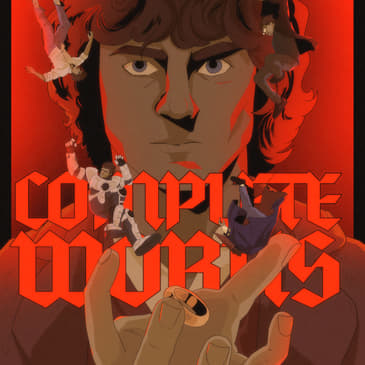


This week, Roy Scheider gets a solid supporting role in the 1970 Faye Dunaway vehicle PUZZLE OF A DOWNFALL CHILD! The feature film debut of Jerry Schatzburg, PUZZLE uses flashbacks to look at the fractured psyche of a once-famous model, and how the industry drove her to her current state.
[00:00:00] It's showtime, folks. Some bad hat harrys. What was the weight of the car when you got it? You're not right from wrong. You just don't care. Benway! Oh sons of bitches. I didn't know. I didn't know. You're gonna need a bigger watch.
[00:00:21] Hello and welcome to episode five of The Complete Works Season Four, a deep dive into the career and films of actor Roy Scheider. My name is Mike Smith and joining me on this journey across
[00:00:36] the Scheider verse is my friend, co-host and fellow Roy boy, Mike Trishio. How you doing? I'm doing great. It's another day in the Scheider verse. Man, that feel. I don't know.
[00:00:46] We're still still working on it. I thought Scheider verse was like that, but that one's locked in the Roy between the lines is what we want to work on. Mike, you're right. It is the right between
[00:00:56] the lines right between the lines, which is the sign off at the end of the episode that we've been doing for the last five episodes. The longer we do it, the more it gets locked in.
[00:01:03] So if we have to, we can't, we can't turn around now. Here we are. Episode five. I know. Oh boy. Momentum is against us. So yeah, we'll we'll figure it out. Episode one of this
[00:01:15] podcast will already be out by this time because this is episode five of this podcast. I'm hopeful how numbers work. You're right. I'm hopeful that people will suggest like a change to the, to the end of the episode, you know? So we'll always be right between
[00:01:30] the lines. You want to outsource it, but a month and a half later. Yeah, exactly. So episode one will already be out. I'm putting it out now in episode five. So maybe by like episode 15, we'll change it. Yeah, OK, we can finally change it. And at that point,
[00:01:47] we'll be like a quarter of the way through the podcast. Now, do you recall, Mike, that we have actually talked about one other movie featuring Faye Dunaway on this podcast in
[00:01:58] the past is that I want to say the Sentinel, but I don't think that's right. It is not the Sentinel. It's because he's a fashion photographer in that. That's true. That is yes, slightly connected to this one. It is not the Sentinel.
[00:02:13] No, I don't. I can't think I remember it was in the Nicholas Cage season if that helps you. Oh, she's not. I thought it was it who in Vengeance of Love story that broke their leg
[00:02:22] and had to wear a cast and is in a blanket. You are so close, Mike. You described her character. Yeah, she in her character in this movie, she like broke her leg right before filming Faye Dunaway did. And then yeah,
[00:02:34] was in a wheelchair the entire time and like, yeah, was covered in a blanket and all that kind of stuff. But it was not Vengeance of Love story. The movie that you look for is inconceivable. Oh, my God. How can I forget about running bit inconceivable? Yes.
[00:02:53] So I felt like I had to bring that one up. But inconceivable is not the best representation of Faye Dunaway's career. No, no. I think that's fair to say. In fact, these days she still acts
[00:03:06] occasionally, but much less often. She's 83 years old. So that makes sense. Her actually her biggest role in recent years was probably being the person who announced that La La Land one best picture. Yes. When in fact it was actually Moonlight at the Oscars that year.
[00:03:21] But you go back to the 70s and 80s and then what a run Faye Dunaway had. I was kind of going through the filmography earlier today. You got Bonnie and Clyde, you got the Thomas Crown Affair, both versions, actually. The three Musketeers from the 70s Chinatown,
[00:03:36] The Towering Inferno, Three Days of the Condor, Network, Eyes of Laura Mars, Mommy Dearest, huge titles in there. Some big movies. King Kong. No, that's Jessica Lang is King Kong. Yes. Jessica Lang was King Kong. You're right, Mike. So yeah, not in that movie,
[00:03:49] but good try. But anyway, yes, she's in a lot of very important big movies. Right. So Dunaway rose to fame with one of her first movies, which was Bonnie and Clyde in 1967, a movie that in addition to launching her career also helped to revitalize the film industry
[00:04:05] and pushed it towards the new Hollywood era of the 70s. Hollywood became a place where small intimate character studies that could experiment with storytelling and editing style could actually get made the total opposite of the big bombastic musicals and westerns of the 50s
[00:04:20] and 60s. Small, intimate character studies with experimental editing techniques like the movie we're talking about today. It's time for Puzzle of a Downfall Child. Puzzle of a Downfall starring Faye Dunaway in a tour de force of exceptional range and my apartment right now.
[00:04:55] I did not lie in Paris. I just made it up. Did you really have an affair with an older man when you were 16? Is that true? I was 15. Puzzle is the story of Lou Andreas Sand,
[00:05:10] fashion model, beauty, whose life unfolds like the puzzle that life is with its many lovers, its ups and downs, its reality so different from her imaginings. I could kill you for that. Faye Dunaway in Puzzle of a Downfall Child.
[00:06:09] All right, so Roy Scheider appears in Puzzle of a Downfall Child, easily his biggest role since his debut in Curse of the Living Corpse as Mark, an ad executive who we see get engaged to our main character in flashbacks. Our main character,
[00:06:23] Lou Andreas Sand is played by Faye Dunaway and we follow her both in the present at a beach house and in flashbacks as she recounts her story to her friend, Aaron Reinhart. Aaron is put by Barry Primus, who appeared in a few Martin Scorsese movies throughout his
[00:06:36] career, including Boxcar Bertha, New York, New York, and more recently The Irishman. He's still popping up. He's still around. Yeah, still Buds. Good to see. Love that. Also in the movie are Vivica Linfors from Exorcist Three and Zondelie as Pauline Galva. Those are the two
[00:06:51] credits that I think she wants most associated to it. Absolutely. Most important ones. Yes. Her husband, Dr. Galba is played by Barry Morse from the TV show The Fugitive. He was actually the character that Tommy Lee Jones plays in the movie in the TV show. John Heffernan,
[00:07:04] who played Eddie Niles in The Sting, plays Dr. Sherman and Sydney Walker from Love Story plays a psychiatrist. Also Barbara Carrera, who played Fatima Blush in Never Say Never Again with Sean Connery appears as TJ Brady, a very small role in the movie. Fascinating. Yeah. I felt bad
[00:07:20] that when the Primus guy came up, all I thought was Primus sucks like the band. I wonder if that's where they got their name. From Barry Primus, character actor of the 70s and 80s. Everyone knows Les Claypool is a big
[00:07:36] puzzle of a damn full child guy. That wouldn't surprise me. I don't know if that's correct. So the movie was written under the pseudonym Adrian Joyce, who is actually the actress screenwriter Carol Eastman, who also wrote five EC pieces around the same time. And it
[00:07:51] was the directorial debut of Jerry Schatzberg, who is a photographer working for magazines before this movie. And he first approached on a way about the role while he was taking her picture for the magazine. And then she was the one who kind of lobbied to make the film.
[00:08:04] Wow. Look at that. Yeah, there you go. Schatzberg would go on to direct movies like The Panic! and Needle Park with Al Pacino, Scarecrow, which was a Palme d'Or winner, the Cannes Film Festival and Street Smart with Morgan Freeman, which I believe was Morgan
[00:08:16] Freeman's first Oscar nomination. So there's that too. His final film would be 2000s. The Day the Ponies Come Back with Burt Young. Puzzle of a Damn Full Child was released on December 16th, 1970. And we already covered that year's top 10 in our loving episode.
[00:08:31] Again, we still don't have the box office info for that specific weekend. I can give you the number one film that weekend, which was Scrooge, the musical version starring Albert Finney as Ebenezer Scrooge. Wow. The dichotomy like we've been talking about of Hollywood at this time.
[00:08:47] It is a really weird couple of years because new Hollywood is coming in. But the last vestiges of old Hollywood are still there. I think it's like two years before this. Bonnie and Clyde is out in 67. I think in 68, like My Fair Lady wins Best
[00:09:00] Picture or something like that. Something along those lines. Yeah. Or no, actually it's Oliver. Oliver wins Best Picture in 68. My Fair Lady is a few years earlier than that. But it's like those big musical extravaganzas which I think are increasingly being seen as pretty stale in
[00:09:16] comparison to what is happening in terms of Bonnie and Clyde and The Wild Bunch and those kinds of movies. It's the green book winning Best Picture of the last couple of years. Right? Exactly. It's surrounded by like, oh my God, Shape of Water 1,
[00:09:28] Parasite wins Best Picture and then Green Book is like just right in the middle. Like it's still there. Man, movies are weird, you know? Yeah. Yeah. The culture is ever shifting. So the IMDB plot synopsis for Puzzle of a Downfall Child reads Lou Andrea Sand,
[00:09:45] a once famous model recalls her past as she tries to make success in the modeling world of New York, her stressful work days, her affair with Mark, an advertising executive, her friendship with photographer Aaron and her downward spiral into ruin. And this week we're
[00:10:00] exploring the filmography that I just rolled right into it. Nice. Good job. Yeah, that's a copy and paste error. But yeah, downward spiral into ruin is the end of that sentence period. Yes. And scene. All right, Mike D, going into Puzzle of a Downfall Child.
[00:10:20] What did you expect from this movie? And what did you get coming out? What are your overall thoughts on this film? Going into it, I was, you know, you sort of hear you hear that plot
[00:10:28] synopsis, that brief plot synopsis that it's like a model in ruin in the present day, reflecting on her traumatic past. Yeah. In 1970s starring Faye Dunaway and you're like, I kind of get, I think, you know, you can kind of put together a little bit of a picture
[00:10:43] for yourself and what this movie is going to be like. And I think it is mostly that, although much more experimental at times than I was expecting. I think that's a pretty good word for it. Maybe unconventional, nonlinear, although we know it's like in flashbacks a lot,
[00:10:57] obviously. But I was pretty shocked at the way how surreal a lot of those transitions and the flashbacks are kind of handled and edited and stuff. I think overall the movie is OK. It's pretty fine. I feel like Faye Dunaway is incredible. Like obviously she's amazing
[00:11:15] in this, but I felt like I wasn't particularly engaged, wasn't super into it. Sometimes you can just get into this kind of like maybe a little bit with like Loving last week actually we talked about where it's like a pretty mellow, not a lot happens in air quote,
[00:11:29] like you know plot wise, but it's sort of like a hangout. You really get invested in the character and you can kind of just enjoy this slice of life moment for them,
[00:11:36] even if it's dramatic and intense and sad moment like it is in Loving. And the same thing for Puzzle of a Downfall Child. But I don't know, there was just something that
[00:11:45] didn't quite hook me. I was sort of like, OK, this is maybe a little like overwrought or something. I don't know if that's the appropriate term, but it's just a lot going on, I think.
[00:11:54] But I think it is really fascinating the way Lou's like memories kind of slip in and out of the present day and visions and stuff and characters are appearing and things that they're not actually part of. Right. And it sort of starts to like bring into question like,
[00:12:08] is any of this true? Is like, is any of this that she all these stories she's telling, did they really happen? Did they really happen this way? And there's a couple times in particular, a moment we'll talk about later with Roy Scheider that like something happens
[00:12:20] twice in a row, but differently both times. And you're like, whoa, OK, that's wild. Like things like that. So she maybe she's Lou is not quite sure how this happened or her memory is a little faded or something. So, yeah, that was that was interesting
[00:12:32] overall, I think. And it's OK. You know, some great performances overall. I'm not super like I wasn't super hooked and not like a great discovery for me. But it's not bad. Yeah, I thought it was very solid. I didn't love it.
[00:12:45] I'm pretty much right there in the same boat with you, Mike. It's I enjoyed many aspects of it. Like you said, I think this is a great star vehicle for Faye Dunaway. I think she's
[00:12:53] really great in this movie. And this is very early in the Faye Dunaway career. Bonnie and Clyde was three years before this. I think it's like Bonnie and Clyde, Thomas Crown Affair, Puzzle of a Downfall Child. It's very close. They're very close together.
[00:13:05] And those movies like Bonnie and Clyde is a one of those movies like we've talked about on this podcast before, I think just because it sort of ushers in this new Hollywood era.
[00:13:13] But at the same time, like it's it's still pretty like I don't know. It doesn't go as experimental as this movie does. You know, like this, this movie really goes for something that I think is fairly radical for 1970s Hollywood. It really reminded me of foreign
[00:13:26] films like that were kind of coming down around the same time. I think like Jerry Shatsburg may have been heavily influenced by Ingmar Bergman. I was reminded of persona watching this movie partially because I think both movies take place in a beach house.
[00:13:39] And so there's there's that. But, you know, it's you know, it's all about like fractured identity and like kind of like trying to figure out who you are and like going back into flashbacks and all that kind of stuff. And so, yeah, I think in terms of that,
[00:13:52] I think it's really interesting just to see like, oh, here's an American movie that's doing the kind of things that were happening in certain foreign territories that were happening in the 50s and 60s. Like those movies were like the very radical
[00:14:03] kinds of films that were happening while Hollywood was sort of playing it safe. Yeah. And I think I think I don't know if I've ever actually like seen Bonnie, like the full on. Oh, man.
[00:14:14] Good movie. I should watch Bonnie and Clyde. But I know that it's like the cultural impact is like the pushing of onscreen violence. Right. That was like one of the most violent movie or whatever at the time. Something like that. So there's that envelope being pushed.
[00:14:25] And yeah, this feels like I didn't even make that connection between like these sort of, you know, European kind of movies like Bergman or like French movies or something. I don't know. It does it definitely. Now that you said that, it was like, oh, yeah.
[00:14:37] And it kind of is all about like it definitely feels like that. And that's sort of like implication and and question marks around memory and stuff like that and being a much more slice of life. That's not really that's more loving
[00:14:49] than this movie. But sure. Yeah. Yeah. This is very much. Yeah. I would say like fractured narrative maybe. Yeah. You know, it's it's largely taken place in flashbacks and you're you sort of have a unreliable narrator that is kind of going back to telling you what her
[00:15:03] story was. And yeah, it's that's that. Right. The movies we did. Hashtag analysis. We did. All right. We're ending this episode right about now. No, I think the movie is solid. It's kind of like you said,
[00:15:18] it didn't really grab me in the way I was hoping for it to just from his description. It sounded really cool and I think it does a lot of really interesting things. But yeah, it just wasn't quite what I was hoping for.
[00:15:28] And also, I think the I think the title Puzzle of a Downfall Child is a great title. It's a it's a very good title for the movie, but it does sort of imply like
[00:15:38] I picture a neo noir when I'm hearing this title Puzzle of a Downfall Child. Right. Yeah. Like that feels like a crime movie title to me. It does. But it also feels like like it's going to be revealed that we're in a snow
[00:15:52] globe the whole time or something like, you know, like just the way the narrative in the structure of the movie is like this kind of dreamy, weird nightmare stuff that happens every now and then. Yeah.
[00:16:01] That like it's going to pull out and reveal that the beach never existed or something like that. You know, like I don't know. But it's funny that that is that Chasperger's last movie has a similarly long
[00:16:13] title, you know, The Day the Ponies Come Home or whatever it was. Right. So he had an aesthetic that he liked in his titling at least. Sure. Yeah. So Roy Shatter's in this movie, Mike. Yes. Roy Shatter plays Mark, the advertising executive.
[00:16:26] I'm going to say it right this time. A lot of consonants in those words. Exactly. Yeah. So Roy Shatter plays Mark, who is a key figure in Faye Dunaway's past here in this movie.
[00:16:36] He's never in the present day scenes. The present day is just Faye Dunaway and Barry Primus. And then the past kind of goes through her entire history as a model who eventually becomes very famous and then ends up in a relationship with Mark.
[00:16:49] So Roy Shatter, I mean, this is Biggest Showcase since Curse of the Living Corpse. I don't think quite as big as Curse of the Living Corpse. That movie, man, still looms large. But what do you think of Roy Shatter in this movie, Mike?
[00:17:02] I think he is really good. It gives this movie, this role gives him a chance to show off that, you know, like simmering, I don't want to say not rage or evil, but like menace, maybe. I don't know. He's got this just sort of womanizing powerful
[00:17:18] son of a bitch energy even. And he's not in very many scenes. Maybe three or two or three. Yeah, I was, you know, at one point I was like, did I forget what Roy Shatter looks like?
[00:17:32] Did I miss scenes with Roy Shatter because I like have face blindness for him suddenly? But no, yeah, he's mentioned a lot. Like Marcus talks about a lot and his figure kind
[00:17:42] of looms large over the movie as her fiancee. Like she meets him, she gets engaged to him. I don't think they actually get married, right? She she leaves on the day of their wedding. Yeah, they're at the courthouse and she's like, I need to use the bathroom.
[00:17:55] And she like runs out the side door and gets a cab. And so, yeah, Mark has a couple of scenes, but he's really not in that much of it. But like his presence is significant in the movie. Like the fact that it's Roy Shatter,
[00:18:07] you know, gives it a little bit more weight, I think, just in terms of like meta textually. Like I know who this is. Yeah. And yeah, and I feel like his presence is palpable in this movie. It's like you're
[00:18:18] meant to have some kind of impression of Mark, even though he's not in that much of the movie. Yeah, yeah. Right down, like right at the beginning, he's at that meet meets at that like dinner party or whatever meets Lou. And they kind of have like a thing.
[00:18:31] And he immediately is like, do you want to ride home? Right. Like he's just like going to give her like just try to pick her up basically. And she rebuffs him politely or whatever. And then immediately her friend, whose name I forget the character tells Lou like,
[00:18:46] oh, you know, he'd like try to come on to me. He tries to come on to everybody. He's just like a horn dog kind of guy. And you get like a little bit of that. Like,
[00:18:54] you know, Lou sort of like, oh, no, he's just, you know, very passionate or like, you know, whatever she can say without being like this is uncomfortable. And that's really the last you see of him for like a good 30 or 40 minutes until she
[00:19:08] tells the story about how she left him on the at the courthouse that he's my we were engaged. You're like, what? But he's always kind of there. You know, they're talking about him rather.
[00:19:17] I mean, yeah, the movie, I think, trusts the audience to sort of fill in the blanks of the relationship a little bit. Yeah. You know, it's telling because it's telling such a fractured story and it's kind of just like very specific memories that may tie into
[00:19:30] each other and maybe don't. And they kind of like weave in and out of that. There's this interesting thing the movie's doing to that's like a meta movie narrative experiment thing because they're the reason Lou and her and her friend Primus sucks are is being interviewed.
[00:19:46] Was Barry Primus Barry Primus is Barry Primus Barry Primus is interviewing Faye Dunaway's character is because he wants to make a movie about her. There's this weird thing. And then she starts to tell this story about what happened to her
[00:19:57] in Paris. And he's like, wow, now forget it. We can't afford to go shoot in Paris. So we don't like skip it. And like the and then so now this movie skips the story from Paris.
[00:20:06] Like there's this weird thing where they're talking about how they're going to make this movie about Lou's character while we're watching the movie about Lou. Yeah. And in the process, making it feel like a more fleshed out life,
[00:20:17] like it's just like, you know, you're you're only like privy to like certain aspects of it, what this movie tell like Dane's to show you. But there is like a much more like fleshed out character underneath it all, which is cool. And yeah, Barry Primus is in
[00:20:28] both the past and the present sequences. Yeah, so there's this weird thing where like after the during the pandemic and everything, I was like, well, this ruins every movie because every movie where somebody wears a mask and everyone pretends you can't see,
[00:20:42] can't tell who it is after four years of everyone wearing masks, it's very obvious you can tell your friends. But in this movie, Barry Primus has a mustache in the present and no mustache
[00:20:51] in the past. And I don't know who he is. So we contain multitudes is what I'm saying. Yeah, fair enough. The facial hair thing is real. It is really absolutely. Yeah, definitely. But yeah, but Aaron is there in both the past and the present. And
[00:21:08] in those past sequences, there is like a spark between the two of them. He's he's like a photographer who is like working with her. Yeah. And they strike up a friendship
[00:21:15] and they hang out a lot and all that kind of stuff. But then that that romance is finally like required in the present day sequences. Yeah. Which, you know, is nice to see. It's good for Lou to have a win, I think at the end of this movie.
[00:21:25] Is it a win? I guess it is. Yeah, a win ish, right? Ish. Yeah, because he sort of asks her out in the past, right? Or asked you find me attractive and she gets all bad. It's like, well, like, I guess friend zone, even though that's
[00:21:38] like not a real problem. That's a problematic thing or whatever. But and then he has another girlfriend or has a girlfriend in one of the flashbacks also. And she gets very mad at that in that. Yeah. That scene and stuff. And he's married. He's married by the end.
[00:21:51] Right. She's like, as he's like, I got to get catch this last ferry. She's like, you know, your wife might start to question, you know? So that's why I was like, is it really a win for Lou? But I guess they express their admiration for each other.
[00:22:05] Yeah. And they kiss. That's a thing. But but yeah, I do think Barry Primus is a good presence in this movie, too. Yeah, it's good to see him. Like I was delighted. Like I forgot he was in The Irishman and I actually just watched Boxcar Bertha like two
[00:22:19] weeks ago. And so I was like, oh, hey, this is this is around the same time, too. This is two years before Boxcar Bertha came out. Yeah, I'll be excited to see Barry Primus in The Irishman when we get to it on Mike and Mike
[00:22:30] go to the movies. Bonus Eps. Yes, that's going to be a Mike makes Mike watch in the future because for some reason, Mike, do you never watch The Irishman? And that might be my excuse to finally rewatch The Irishman, actually.
[00:22:41] There we go. You know, it is it is three and a half hours. I need to like set aside time for that movie. But yeah, any other thoughts about Roy Scheider in this week, Mike, as Mark?
[00:22:50] Yes. So there's the scene. So they she Lou leaves them at the courthouse, right? She like ducks out of the side later that day. He comes home and he's like, that's it. It's over. Like, don't change your mind. And they have this this exchange where he's he's packed.
[00:23:06] I think she has already packed his bags or something like that. This is kind of the big Roy Scheider scene of the movie. Yeah. Yeah. And they have like a argument about it and stuff. And he goes to leave.
[00:23:15] And this is the this is the weird, like interesting memory flashback thing the movie does sometimes where he goes to leave and she stops him to give him a drawing, like a self portrait. And he's like, he says something and like throws the door open
[00:23:30] and it hits her hits her in the face and she goes flying. But then it immediately cuts to her sitting on the couch and him slapping her. Yeah. So and then it cuts to afterwards and she's got a black eye.
[00:23:39] And I was like, whoa. So like, which is the story she tells herself? Which is the one that happened? What's the real memory? How did this happen? You know, that was like the big it. It happens a couple other times, but with less dramatic things
[00:23:50] where like a person will be there. Right. And then it'll cut and they'll be gone. But this is like violence. And I thought that was really fascinating of like what's the version she's telling Barry Primus of how this happened and everything like that.
[00:24:04] But yeah, this is like his Roy Scheider's big standout scene. Yeah, absolutely. And it's really like what's the version she's telling Barry Primus and everyone else about what happened? But also, like, I don't know, has she like told the false version
[00:24:16] of the story so many times that it's like kind of become like one with the memory of the real thing that happened? And yeah, I don't know. It's I think that is a really fascinating moment. And I think Roy Scheider sells it very, very, very well.
[00:24:28] Like he, you know, he sells both versions of that scene really well, where, you know, he's like the door thing is like, you know, an accident theoretically. Right. Yeah. And then but then he has that like kind of vicious moment where he slaps her.
[00:24:40] Very intense. Yeah. And then and then they like make up, right? Like he goes to the friend's house and I don't know if it's later that day or whatever, but it's all part of that flashback. Right. Yeah. Where he's like, I see her car is out front.
[00:24:52] I know she's here. Right. Like kind of thing. And they eventually let him into the apartment and like hug and make up. But it doesn't seem like it's a happy obviously like going to be a good thing. And she still does leave him. Yeah.
[00:25:06] And there's a scene later where she's on the phone with him and he's like kind of trying to get her to come back and or no, she actually calls him. I think at this point, actually. So we haven't really talked about this, but like she has,
[00:25:16] she's been abusing drugs like for years now at this point. And it's like really bringing her to a breaking point. Like she has like a nervous breakdown, all that kind of stuff. And I think that's part of why, I mean, you know,
[00:25:27] there's a host of reasons why their relationship with Mark wasn't going to work out. But, you know, I think the drug problem is a big part of it. And I think, you know, they do make up in that moment. And I think she does go back to him.
[00:25:37] But then later you see her like she has she and Mark are no longer together. I think it's partially because the drug issue and falling more and more into drugs. And there's this scene where she calls Mark. And I think Mark might be with someone else.
[00:25:51] Like he maybe has like another like, you know, he's moved on, has another girlfriend. But she's trying to get him to help her. And he's like, I've helped you so many times. I can't do this anymore. That kind of thing. Like she's at a rock bottom moment.
[00:26:03] Yeah, he's like, you know, somebody's here. I can't really talk. She's like trying to start like this conversation or whatever. Yeah. And he's like, I can't really talk right now. And she's like, well, is it a girl? Is it another model? Do I know her?
[00:26:14] Tell her I said hi if it's somebody I know. And she's just like, you know, the desperation and all that. And then she's like, well, why don't you just come over? And he's like, I have to go. This kind of thing that he's moved on. He's beyond this.
[00:26:24] Even if it's two more philandering, womanizing, abusive shit that he's doing. We don't really know. But he's beyond this relationship and she's trying to come back to this. And I think he even says like, you don't want to talk to me.
[00:26:38] You just don't want to be alone or something like that. That's part of the one of the final moments before the institutionalization that happens in the last 20 minutes of the movie. The final flashback, really. And yeah, yeah, I don't know. It's just intense.
[00:26:51] It's one of those movies where you just sort of watch. I was going to say somebody make all the wrong decisions, but Lou never really does. She's making, you know, in retrospect, not smart choices, but it's never like the obviously wrong choice.
[00:27:03] Right. It's always just like, oh, the camera adds, you know, 10 to 15 pounds. So like maybe you should lose five, five to seven pounds. And so she starts taking drugs to be skinny and like all that,
[00:27:11] you know, and just like the spiral that that little that tiny little domino can start and where it ends in her fully institutionalized. Right. I mean, it is really how about how the industry breaks people like the the beauty industry, the fashion industry,
[00:27:26] which I think is a really interesting film, a really interesting movie for Jerry Shatsburg to make as his first film as somebody who was a fashion photographer for years before this and like met Faye Dunaway doing that. And they kind of collaborated to make this movie together.
[00:27:41] Yeah. Yeah. It definitely feels like a, you know, like insider look at the abuses of the system. Right. And and how everyone seems, maybe not everyone, because the photographers that are at Faye Dunaway's at Lou's first
[00:27:54] shoot are like awful to her. Right. They're like, oh, you why'd you even come here? You're like, you look like you look like shit or something. I forget what they say to her. But yeah, but something on those lines.
[00:28:02] Basically like that. But like her agent is like, oh no, don't worry. And like is so protective of her and helps her put like do this makeup and then it's and like talks her through the first photo shoot and stuff.
[00:28:11] And then even by the end, her she's the agents and the and all those people are just as blood sucking and vicious as everybody else because they all get the commissions and they're you can't charge this guy less your rate,
[00:28:23] even though he's your best friend, because then I don't get the cut that I need. And like all this stuff. And yeah, they just they just chew her up. There's one scene in particular that's just like awful when she goes to
[00:28:34] she gets it's like towards the back half of the movie. I forget exactly where when it happens, but she goes to a shoot and she shows up very early and because she got this new look I want to put on.
[00:28:42] I want to surprise all my old friends. Right. And the photographer is like, oh, who are you? She's like, she has her name and he's like, OK, are you one of the models? And just like she has this one moment, like the mask slips for a second
[00:28:53] where you see how deep that cuts her that this guy doesn't know who she is anymore. Yeah. And yeah, the industry will just chew you up and spit you out. Basically. Right. And that's the movie. And it is inspired by the life of a real model.
[00:29:04] And St. Marie, who Jerry Jerry Shatsburg did like a series of interviews with her. And that kind of became the basis of what this movie was. And so, yeah, it's you know, it's all it's all based in truth.
[00:29:14] It's people who were very heavily involved in the industry in the 60s, you know, kind of getting to make this movie in the 70s about what it was like. Also, apparently I'm not sure how he got connected to this, but Paul Newman, early champion of this movie.
[00:29:26] He really yeah, he was one of the ones that helped to get financed at Universal. So hey, Paul Newman, there you go. That's cool. I will say apparently Roy Scheider, I'm reading like I am to be trivia right now.
[00:29:38] Apparently Roy Scheider, not the biggest fan of a puzzle of a downfall. Really? I mean, he looks like a bastard in it. Is that what I wonder if that's right? That could be it.
[00:29:46] But yeah, he I guess there was documentary in 2003 and Roy Scheider was talking about the movie and his quote was, I had never been involved in a film project that spent so much time studying how a woman drinks her tea. He's got big, big chauvinism vibes, you know.
[00:30:05] I guess we haven't really had to address yet, but there it is. I mean, there that is. Yeah, I think it might just not have been for him. Yeah, I mean, I wonder how much we've talked about this a little bit already broadly,
[00:30:18] where he falls on that famous Dustin Hoffman, Peter O'Toole story. Like, well, have you considered acting my dear boy or whatever? Right. With the verse, the method and all that stuff. So I wonder, I don't really know where Roy Scheider falls on that spectrum.
[00:30:30] And I wonder if that's what he's talking about here. It could be. Yeah. I mean, you know, he, I always think of him as very naturalistic performer, like somebody who is kind of going for,
[00:30:40] you know, more downbeat to like more kind of relaxedish, like a sort of collected cool about most of his characters. Right. Which is what made the curse of the living corpse so surprising because that's such a theatrical performance from him, which is very fun.
[00:30:53] And I think the seventies is like littered with that kind of performance, especially like the more naturalistic stuff. And that's the kind of thing that was like sort of started it like it really started in the fifties when like Marlon Brando was doing
[00:31:03] Streetcar in desire and all that. But it kind of like really, you know, sort of comes to a head in the seventies when like, you know, we've been saying it every week, but the new Hollywood
[00:31:11] era really was something somebody should study. Maybe we should write some books about this. Yeah. Get our top man on this new Hollywood thing. Just imagine I'm thinking just because it's such a hyperbolic depiction of that, of this whole thing and like the actor studio
[00:31:29] and all that stuff. But in Asteroid City, when they're all chanting, you can't wake up if you don't go to sleep or whatever. Like I wonder where Roy Scheider would be in that. She's taking acting classes with Willem Dafoe as fake German acting coach in that movie.
[00:31:43] Interesting. Much to consider. Much to consider. But how do you think this fits into the Roy Scheider roles we've seen so far, Mike? Well, it's the sort of progression into the calm, cool and collected, you know, in control of his emotions, even if there is
[00:32:01] a simmering menace or violence underneath all that. Right. In Loving, we talked about him being super like it being an interesting role for him as this kind of like neurotic, frantic, harried guy. Yeah. Yeah. Which we've never really seen before from him
[00:32:19] or because I haven't seen from him. So this is kind of maybe the transition into maybe Chief Brody's a little bit both of that. Obviously, he's kind of like a nerdy loser guy in that movie. But I'm thinking of him in French Connection and all these other action,
[00:32:33] more intense action movies where he's got this swagger and calmness about him. And this feels like one of the first roles like that. Yeah. No, I totally agree. I mean, we haven't really had like a great showcase for Roy Scheider since Living Corpse. You know,
[00:32:48] Paper Lion. He's in one scene, Stiletto. He's in a couple of scenes, but you know, he's a very minor character and then Loving. He's in two scenes and yeah, he's kind of just
[00:32:56] running back and forth. But yeah, Living Corpse really gave him like a lot to chew on. He was he was the bad guy. He was the main bad guy at Living Corpse. He was the living
[00:33:03] corpse. He was actually the official living corpse. But yes, I think this gives him his greatest showcase since then. But, you know, a lot of time has passed since then. It was 1964 when Living Corpse came out. It's 1970 now and he's been like kind of cutting his teeth on
[00:33:17] TV, doing soap operas and like doing these like bit parts and movies here and there. And I think this performance kind of gives like the aura of somebody who's like sort of about to break out a little bit. Yeah, that makes sense. I can see that he's got
[00:33:28] he's got this makes an impression in not very many scenes, but has a controlled performance going on. So he's on the verge. He's on the verge. And next week going to be a big one on the podcast, Mike. Well, I'll tell you soon.
[00:33:47] Yeah. Any other scenes or moments in Puzzle of a Downfall Child that stand out to you, Mike? I know we should talk about. Well, just the whole the whole like institutionalization sequence I thought was. Oh, yeah. Well, it's like T.H.X.
[00:34:01] I was reminded of the, you know, 2001 Space Odyssey. Yeah, it's an entirely white room. Yeah, it's the whole thing. Right. Yeah. And that's this is the one of the sequences that's been happening throughout most of the movie. She will like reference this
[00:34:15] this kind of like great love affair she had when she was 16 with this older guy who died in a plane crash or something. And they're like, maybe he was a priest or so. I don't really understand. Like you see that at some point in the movie,
[00:34:27] you see her like get into a car with somebody as she's describing it. She's supposed to be like 14 years old or something. And she had like, yeah, some kind of love affair with an older man. Yeah. And he's like a significant
[00:34:38] member of the community is kind of what I think how she describes it. Yeah. Right. Yeah. She can't say his name or won't say his name because like you'll know who it is sort of
[00:34:45] is what she tells Barry Primus' character. Right. Jerry was a race car driver. Correct. Yeah. Yeah. That's who she was sleeping with was Jerry. Yeah. And yeah, I don't know. It just sort of starts off the sequence and spirals out
[00:35:02] into like, you know, now we're seeing her as a child, but then her and the institution and back and forth and her in the present day talking about this, this fisherman that is the
[00:35:10] only person she's interested in on the beach and all this stuff. But the actual sequence of the flashbacks in the institution are really surreal and wild and weird. And there's parts of it that seem like it's in reverse while they're trying to sedate her
[00:35:26] or control her. Right. It seems like it's being played backwards. She's having conversations with different doctors and orderlies and nurses and stuff. But it's all one conversation where it'll be a continuous thing where she'll be talking and it'll pan over. The camera will turn
[00:35:42] over and show now there's a new person at the bedside talking to her, and then it'll turn back so you only see Faye Dunaway. And then when the camera turns back, it's another new person
[00:35:49] there. So that's really surreal and weird, but it's all one long conversation. And the sequence where the guy is like, oh, it's all in your head, but also it's true. Look, they're all talking about you. And it leads her down the hallway to another room where it's
[00:36:02] every character from the movie is all in there talking shit about her. And so she feels very justified in what she's doing. But yeah, I don't know. It's all just really weird and stream of consciousness kind of thing going on. Yeah. Which again, it sort of does remind
[00:36:19] me of that To This Moth space odyssey sequence. The vision sequence near the end. That movie came out two years before this one. It could have been an influence. Absolutely. I will say this movie did remind me of a movie I watched recently. This movie came out after
[00:36:32] Puzzle of a Downfall Child, but John Cassavetes, the one under the influence. I saw that recently and yeah, a very similar kind of story. I mean, this movie does the flashback narrative thing, but both go for these incredibly naturalistic, real feeling performances
[00:36:49] centered on this one woman who is just having a bad time, having this nervous breakdown. Right. And yeah, I think women, the influence is more successful in exploring that and exploring
[00:37:01] kind of their roles in society and what it is around them that made them crack and all that kind of stuff. And if they are even crazy, if like the world around them is insane, that
[00:37:11] is also part of it too. So I think one of the influence is more successful, but this feels like almost like a trial run for what that movie does. Yeah, that makes sense.
[00:37:19] Yeah. I think it's just really interesting. Even if the story or like the movie as a whole didn't necessarily like grab me or make me like super jazzed, there's stuff in it that
[00:37:29] is just like, wow, this is crazy. And like a really unique and interesting way. Like there's the towards the beginning of the movie where she first is like when she first like introduces
[00:37:40] this idea that like I loved only ever loved one person when I was 14 or whatever. And it's like her on a park bench and like a like I think like a priest walks behind her and like
[00:37:49] catches her eye and she like gets up or maybe it's this older guy. I don't really know. Just black suit or something. And she gets up and like goes to follow him into whatever door he's going
[00:37:58] into. And then you hear like a whistle, like a coach kind of whistle, you know, and she turns around and it's like the entire schoolyard full of nuns and other school children.
[00:38:08] But every window on the school is blown out like it's broke. And like there's nuns in every window while everybody's watching her. You're just like, what the fuck is going on? This is intense as hell. And she's a really striking imagery, I guess, is some of the stuff,
[00:38:22] you know? Yeah, absolutely. All right. Should we move on to letterbox reviews, Mike? So we should the people have to say about Puzzle of a Downfall Child? Yes. I'm very interested to see how many people have seen this. Yeah, definitely more than I've seen the last few
[00:38:35] movies that we've talked about. Interesting. I think I think Living Corpse might still be our most popular movie so far. Was popular. I mean, you know, in terms of like amount of people who have watched them. Oh, yes. Yes. However, I did I did know a couple people
[00:38:49] who had reviewed this movie, including one from somebody who used to program the album Draft House and Yonkers that we used to go to all the time. Now he works for vinegar syndrome.
[00:38:59] Got a four and a half star review from Justin the Liberty. Wow. Yes. And he calls it the pastel demon. It's a reference to the neon demon. Yeah. You know, the Nicholas winning
[00:39:10] reference movie from a few years ago. He says it's amazing that a major studio put this out chaotic, yet subtle, bold reds and whites all over an energy that could only exist circa 1970. Dunaway is sublime. Make this more available, please. Which, you know,
[00:39:24] hey, you run a Blu-ray label. You can make it more available. Just throwing that out there. Who knows when that review is from? That's I mean, is there any kind of real Blu-ray of
[00:39:33] a puzzle of a child? Do we know? I don't know off the top of my head, but I think that I we watched a Blu-ray rip, I believe. OK, well, fair enough. So there is some kind
[00:39:41] of Blu-ray out there. I'm going to see. I'm double checking when the review is from right now. I feel like it's relatively recent. We don't have to put we don't have to put them on blast on the podcast. It was twenty seventeen, twenty seventeen actually,
[00:39:53] which the neon demon reference makes sense because that really came out around that time. But yeah, anyway, Justin Liberty running vinegar syndrome. I mean, this is not the kind of movie vinegar syndrome usually puts out.
[00:40:04] No, but it could potentially be that that new like I don't know how to pronounce it cinematography, but cinematic cinematograph or whatever is the new label that Justin label. Yeah, that Justin is the head of. Oh, yes. Yeah. So hey,
[00:40:20] anything could be in the works. All right. So Justin Liberty gave it a four and a half star review loves this movie. Here's one from Jacob Knight who gave it three stars fractured Rogian psychodrama as we witness the recollections, ramblings and
[00:40:32] misrememberances of a young woman's descent from superstardom not entirely successful as the emotional cores kept at arm's length via our chilly, possibly untrustworthy guide to her own life. But there's enough authentic 70s New York location shooting to fit a lesser
[00:40:45] filmmaker's whole body of work for all the overtly actually moments. The most entertaining instance performance was Faye Dunaway trying to feign enthusiasm over eating a street vendor hot dog. I forgot about that scene. It's actually really stood out to me.
[00:41:02] Like, what are we having this conversation like a law and order at a hot dog stand? Like, what are we doing? But it does mention there's a lot of great 70s New York in this movie,
[00:41:11] which is cool to see, which we've seen a lot of in the last few episodes. Yeah. Yeah. Loving handsome paper lion also had shots of Central Park in 1968, which this movie also has like a pretty key sequence that takes place in Central Park.
[00:41:25] Her taking photos there. Look at that. And yeah, it was it. Is it Nicholas rogue? Is that the director, the Rogian that they reference their Nicholas rogue director of, like, don't look now and films like that. Yeah. Yeah. Also makes sense. It's an apps
[00:41:36] comparison. Absolutely. Yeah. It's another one of those things that, like, I never I didn't think about it, but as soon as you said it was like, yes, 100 percent there it is. All right. Here's a three and a half star review from K.Y.K. weird and unsettling,
[00:41:48] but also an amazing vehicle for Faye Dunaway to wear amazing outfits and lipstick and showcase all different persona while playing ages 15 to like 50. Yeah. Which is true. Very convincing. Ever at every age that she is in this movie. It's kind of weird.
[00:42:02] I never questioned it. That's not like I never like, you know, like she doesn't really change all that much between the past and the present sequences and all that kind of stuff. But yeah, no, she she plays it all very well. Yeah. It's a real testament to like,
[00:42:14] you know, makeup artists where you can make her look 15 and then also like, you know, former addict at 50 or whatever. Yeah. They do a really great job. If they made this movie today, they digitally D.H. Faye Dunaway or exactly crazy shit.
[00:42:27] Be awful. OK, last one. Here's a four star review from Laird. An affair to misremember. He said we break ourselves apart to build ourselves back better. If Citizen Kane were about Norma Desmond instead of Charles Foster Kane and shot and edited by
[00:42:41] some of 1970s Hollywood's best and brightest at times almost like a jello with its glamorous models and costuming and aggressive editing style and deep reds only not a whodunit, but a who is she? Well, there you go. Hashtag deep.
[00:42:54] You see, I this I think that's interesting that, you know, the Jalo comparison came up because I can sort of see it. Yeah. A lot of those movies take place like in fashion houses
[00:43:05] and around this kind of industry. So yeah, I think it is sort of like we've compared this movie to a lot of other things in the course of this episode, just like, you know, European
[00:43:15] films of the 50s and 60s and, you know, movies that came after it, like one of the influence and, you know, now Jalo is and other other stuff. And I think it is the like
[00:43:24] the fracturing of the narrative. Like it sort of makes it feel like a sort of Rorschach test of like what kind of viewer you are to, you know, kind of get into this. Right. What are your references you bring into this movie? You'll probably find them.
[00:43:37] Exactly. Yeah. So there it is. The puzzle of a downfall child. It's pretty good. It's pretty good. I feel like we talked. We talked me into liking it more. Yeah, I think the same. You know, I kind of came away from it being like, yeah, it was solid.
[00:43:50] I think I gave it a three and a half and letterbox, but it was like a soft three and a half. Yeah. You know, but now I feel I feel more firm in my commitment to that three and a
[00:43:58] half. I feel like, you know, there there was a lot of really interesting stuff in this movie and I think maybe a rewatch down the line might illuminate more stuff. Yeah. Good thing you're an assistant programmer at a at a repertory theater, Mike. Anything's possible. Yeah. That's crazy.
[00:44:16] I go into next month's program meeting and be like, guys, puzzle of a downfall child. And they'll be like, I don't know what that is. Pitch a Faye Dunaway month, but don't. But it's this instead.
[00:44:28] You know, that is the thing where, you know, we're a nonprofit or rep theater. We play a lot of really great stuff. But, you know, we try to be like somewhat commercially minded. Yeah. You need some tickets to be bought.
[00:44:39] Exactly. Yeah. We do a Faye Dunaway series and we don't have Chinatown. We don't have don't have Bonnie and Clyde, but we have puzzle of a downfall child. It's it's going to be a quiet one. I'll be there, baby.
[00:44:50] My tea is flying out to go see puzzle of a downfall child at the Roxy. All right, Mike. Do you think that brings us to the end of this week's episode? Where can we find you online this week? You can find me at MD film blog on Twitter
[00:45:02] and letterbox and blue blue sky where you can also find the podcast at Mike and Mike pods on on blue sky and I guess Twitter. What is it on Twitter? Complete works.
[00:45:13] That's your that's your plug. Complete works pod W R K S no O in the word works. That's right. Yes, you can do that. You can find me online at M Smith film blog on Twitter. Mike Smith film on letterbox radio, Mike sandwich Instagram.
[00:45:26] Thanks so much for listening to complete works. Mike Smith. That's my decree show. Don't forget to rate and review the show on Apple podcast or Spotify podcast or any other podcast app. And if you want to contact us, like Mike said,
[00:45:35] you can tweet this at complete works by W R K S no O in the word works or Mike and Mike pods on blue sky. I really should follow that one of these days. You can find the rest of our
[00:45:45] podcasts and rapture press alongside many other podcasts, but kinds of comic books and movie news and all that good stuff. Our theme song was created by Kyle Cullen. He reached for your own podcast themes at Kyle's podcast themes at gmail.com. And our logo was designed by
[00:45:58] Mac V or at fearless guard on Twitter. As of this recording, we finally saw the logo. It looks great. Very excited about it. Yeah, thanks, Mac. Appreciate it. And in case we haven't, thanks Kyle on the air for the theme song. Great job, Kyle. It's awesome. We realized
[00:46:11] five episodes in. Thanks, Kyle. Yes. Well, we didn't have the song when we first started recording the episodes. They don't even know that. Yeah, exactly. It's all time travel wiggly wobbly. The one sense next week is the first biggie of the Scheider filmography.
[00:46:25] We're talking clutes, clute, baby, clute, baby, which, you know, this, you know, weird, again, time travel stuff. But we're about to talk about the Pelican brief directed by Alan J. Peculia for Mike and Mike go to the movies, which will have been released many weeks
[00:46:39] ago by the time you're listening to this episode. Yes. But yeah, we'll have another Alan J. Peculia film. We did a in the past review of a Peck of Pecula movie that came out 30 years after clue in the future. You get it. Yeah, exactly. Clue next week.
[00:46:57] That's the important part. Clute next week. Next week, we're talking clue. Remember to check out our other podcasts, Mike and Mike go to the movies for all kinds of other movie related stuff, including recent releases, ranked list, general discussions and a lot more.
[00:47:08] Thanks so much for listening, guys. And here it is. Remember to always roid between the lines. You know what? I think you're right. I'm starting to like it. We got to commit to it now.
[00:47:16] That's it. It's part of the pit. It's part of it. It's part of it.